







What's Happening?
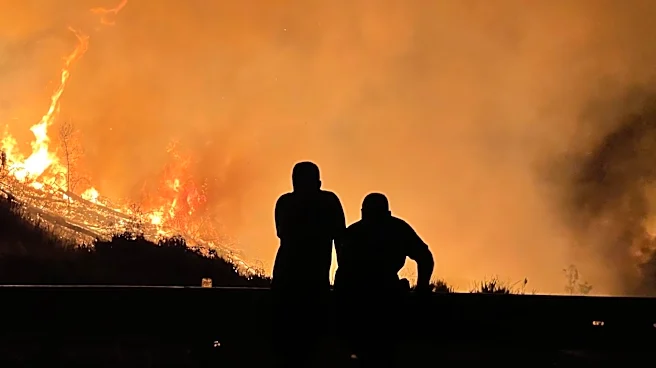
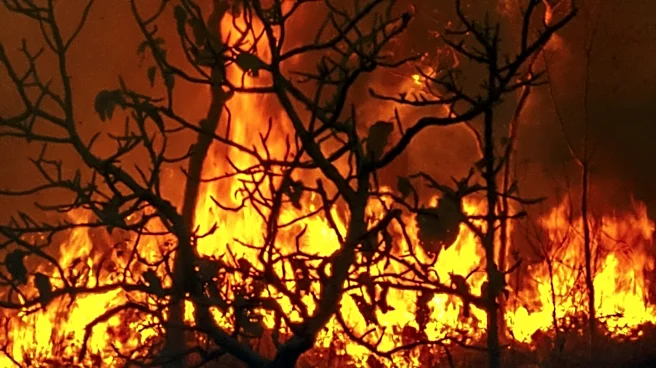
The United States has reached its highest level of wildfire preparedness, known as level 5, due to an unprecedented number of fires in 2026. This year has already seen 41,779 fires, marking the most active season in the past decade. The prolonged wildfire season,
now lasting six to eight months in some areas, is attributed to climate change, which has resulted in drier summers and higher winds. Federal agencies, including the U.S. Forest Service and the National Weather Service, are responsible for resource allocation to combat these fires. However, at level 5, resources are stretched thin, potentially limiting the ability to respond to new fires.
Why It's Important?
The escalation to level 5 preparedness highlights the severe strain on national resources, impacting the ability to manage new fire outbreaks. This situation underscores the broader implications of climate change on national safety and resource management. The smoke from these fires can travel vast distances, affecting air quality and public health far from the fire zones. The increased frequency and intensity of wildfires also pose significant risks to ecosystems, property, and human lives, necessitating urgent policy and resource management adaptations.
What's Next?
As the fire season progresses, federal agencies may need to prioritize resource allocation, potentially leaving some areas with less support. This could lead to increased reliance on state and local resources. The situation may prompt discussions on enhancing federal and state collaboration and increasing funding for wildfire prevention and response. Additionally, there may be calls for more aggressive climate action to mitigate the underlying causes of these extreme weather patterns.