



What's Happening?
A significant solar event, a coronal mass ejection (CME), has intensified aurora displays across the globe. Russian cosmonaut Sergey Kud-Sverchkov captured stunning footage of the auroras from the International Space Station, showcasing vibrant red and
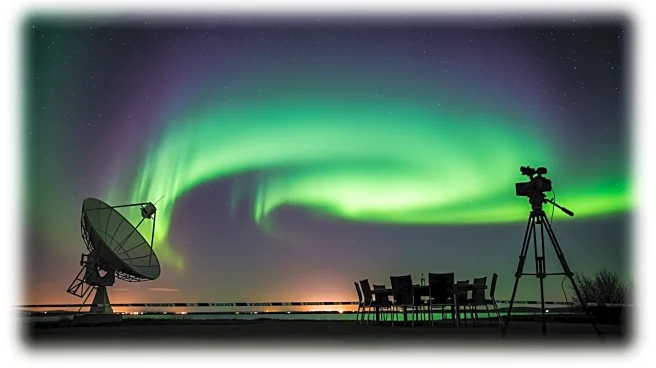
green lights over Earth. The CME, a massive burst of solar material and magnetic fields from the Sun's outer atmosphere, reached Earth by Monday evening, leading to a severe G4 geomagnetic storm. This event has provided photographers worldwide with the opportunity to capture breathtaking images of the auroras, with notable displays reported in various locations.
Why It's Important?
The intensified aurora displays highlight the impact of solar activity on Earth's atmosphere. Such events can have broader implications, including potential disruptions to satellite communications and power grids. The visual spectacle also underscores the interconnectedness of space weather and terrestrial phenomena. For scientists, these events offer valuable data to study the Sun's behavior and its effects on Earth. The public's fascination with auroras can also drive interest in space science and awareness of solar activity's potential impacts.
What's Next?
As solar activity continues, scientists and space agencies will monitor for further CMEs and their potential effects on Earth. The increased frequency of such events could lead to more opportunities for scientific observation and public engagement. Stakeholders in satellite and power industries may need to prepare for possible disruptions. Additionally, the captivating nature of auroras may inspire further public interest and educational initiatives related to space weather.