








What's Happening?
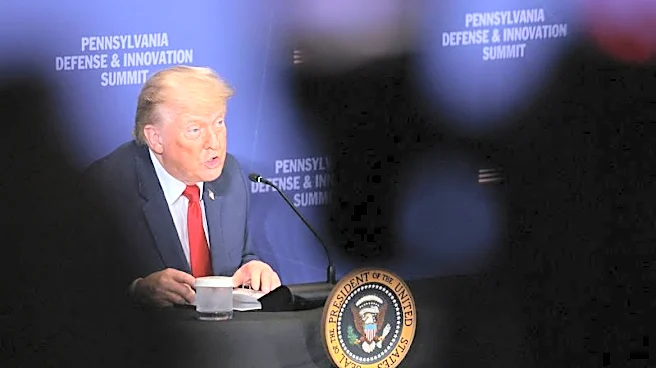
In a recent development, President Trump has accused China of illicitly acquiring 220 million American voter files, alleging broader efforts to influence U.S. elections. This accusation was made during a televised speech in Washington. Concurrently, Chinese
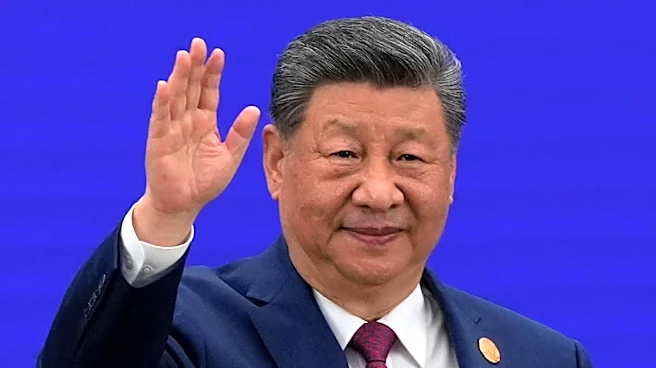
President Xi Jinping addressed a major artificial intelligence summit in Shanghai, promoting China as a responsible global leader in technology. Xi emphasized the need for AI development to be positive and beneficial for humanity, advocating for precise oversight and governance. The contrasting messages from the U.S. and China highlight the growing technological competition between the two nations, particularly in the field of AI. Xi's speech also included a call for AI to be considered a global public good, with China willing to collaborate internationally on its development.
Why It's Important?
The accusations by President Trump and the subsequent response from Xi Jinping underscore the escalating tensions between the U.S. and China over technological dominance. The U.S. claims of data theft and election interference by China could have significant implications for international relations and cybersecurity policies. Meanwhile, China's push to lead in AI governance and its establishment of the World Artificial Intelligence Cooperation Organization reflect its ambitions to set global norms in technology. This development could influence global AI regulations and impact the competitive landscape for AI technology, affecting industries and national security strategies in both countries.
What's Next?
Following these developments, both countries have agreed to initiate an AI dialogue, as decided during a summit between President Trump and Xi Jinping in May. This dialogue could potentially address the complex issues surrounding AI governance and cybersecurity. However, deep-seated distrust and bureaucratic challenges on both sides may complicate these discussions. The international community will be closely watching how these talks progress and whether they lead to any substantive agreements or changes in policy.