







What's Happening?
Mark Wigley, an architect, historian, theorist, and Professor and Dean Emeritus at Columbia University, asserts that landscape has become the most politically charged site. In an interview, Wigley discusses how the concept of landscape, traditionally
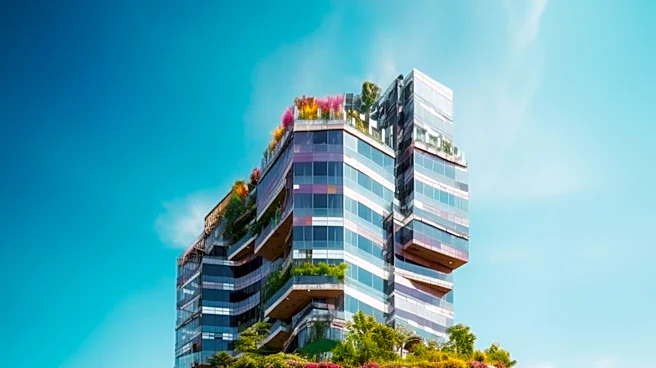
viewed as a defense against nature through domestication, has expanded to encompass the entire planet in the age of the Anthropocene. He argues that architecture, from its Vitruvian origins, has always been about separating humans from nature and the soil, leading to a loss of microbial diversity in humans and the soil itself. Wigley highlights that modern architecture, with its emphasis on hygiene and control, further exacerbated this separation. He suggests that the current understanding of landscape extends beyond physical spaces to include vast interconnected systems like motorways, plumbing, electrical grids, and even the internet, making it a highly technological and political domain. Wigley also notes a shift where many architects are now acting as landscape designers and vice versa, indicating a blurring of traditional professional boundaries.
Why It's Important?
Wigley's perspective redefines the significance of landscape, moving it beyond aesthetic considerations to a central role in political, social, and environmental discourse. His argument that the entire planet is a 'vast landscaping project' underscores the profound human impact on Earth, challenging conventional notions of nature and human exceptionalism. This re-evaluation has critical implications for urban planning, environmental policy, and architectural design in the U.S. and globally. If landscape is indeed the most politically charged site, then decisions regarding land use, infrastructure development, and ecological restoration become inherently political acts with far-reaching consequences for communities, ecosystems, and resource distribution. The blurring of lines between architecture and landscape design also suggests a need for interdisciplinary approaches to address complex environmental and societal challenges, potentially leading to new educational paradigms and professional collaborations aimed at creating more integrated and sustainable environments.
What's Next?
The evolving understanding of landscape as a politically charged and technologically integrated domain suggests several future directions. There will likely be an increased emphasis on interdisciplinary collaboration between architects, landscape designers, urban planners, and environmental scientists to address complex global challenges. Educational institutions may adapt curricula to reflect this broader definition of landscape, fostering a more holistic approach to design and environmental stewardship. Furthermore, the concept of 'radical political landscape design' could gain traction, encouraging experimental and transgressive approaches that challenge conventional norms and moralistic frameworks in design. This could lead to innovative projects that prioritize ecological health, social equity, and a deeper connection between humans and their environment, moving beyond purely aesthetic or functional considerations. The ongoing discourse will also likely involve critical examinations of how technology, from smart cities to personal devices, shapes and is shaped by this expanded understanding of landscape.
Beyond the Headlines
Wigley's insights delve into the ethical and philosophical dimensions of human interaction with the environment. By asserting that 'landscape is now probably the most politically charged site,' he challenges the anthropocentric view that often underpins design and environmental efforts. His critique of the 'moral tone' in climate change and extractivism discourses highlights a deeper issue: the tendency to frame environmental problems solely in terms of human survival and guilt, rather than as opportunities for radical experimentation and re-evaluation of our relationship with the non-human world. This perspective encourages a shift from a self-policing, virtue-signaling approach to a more transgressive and questioning one, where design can provoke thought and reveal hidden realities. The historical separation of humans from soil, leading to microbial loss, also points to a fundamental disconnect that has profound implications for human health and ecological balance, suggesting that a reintegration with natural systems is not just an environmental goal but a biological imperative.