



What's Happening?
Scientists at The Rockefeller University have made significant strides in understanding the T cell receptor (TCR), a protein complex crucial for T cell immunotherapies. Using cryo-electron microscopy (cryo-EM), researchers studied the TCR in a biochemical
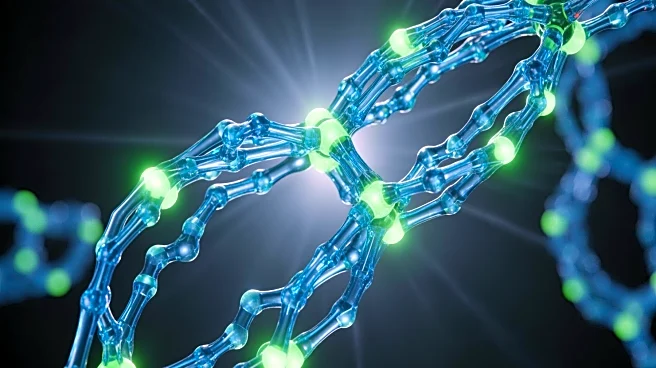
environment that closely mimics its natural setting. They discovered that the TCR remains compact until it encounters an antigen, at which point it rapidly opens, a behavior likened to a 'jack-in-the-box'. This finding contradicts previous studies and provides a deeper understanding of the TCR's activation process. The research, published in Nature Communications, could lead to improved and expanded use of T cell immunotherapies, which are currently effective for only a limited number of cancer types.
Why It's Important?
This discovery is pivotal for the future of cancer treatment, as it addresses a fundamental gap in the understanding of T cell immunotherapies. By elucidating the TCR's activation mechanism, researchers can potentially re-engineer these therapies to be more effective across a broader range of cancers. This could significantly increase the number of patients who benefit from such treatments. Additionally, the insights gained could inform the design of vaccines and other immunotherapies, enhancing their efficacy and application. The research underscores the importance of basic science in advancing medical treatments and could lead to breakthroughs in how the immune system is harnessed to fight cancer.
What's Next?
The findings open avenues for the development of next-generation immunotherapies. Researchers may focus on re-engineering T cell receptors to adjust their sensitivity and activation thresholds, potentially making them more effective against various cancers. This could involve designing therapies that are more responsive to a wider array of antigens. Furthermore, the study's insights might be applied to vaccine development, optimizing how vaccines stimulate the immune system. Continued research will likely explore these applications, with the potential for clinical trials to test new therapies based on these findings.