






What's Happening?
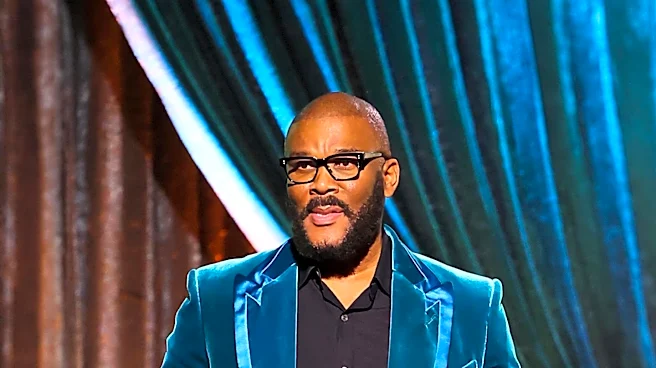
Tyler Perry has provided $43,000 to Brenda Daurham, an 81-year-old woman from Markham, Illinois, whose home was severely damaged by a burst kitchen pipe. Daurham's insurance company, Allstate, denied her claim, citing policy exclusions for 'wear and tear,'
'deterioration,' and 'seepage,' despite an Allstate representative initially assuring her that 'everything was covered.' The denial left Daurham with a nearly $18,000 lien for water mitigation work and in significant debt. Perry publicly criticized Allstate on Instagram, questioning their 'good hands' slogan, and subsequently confirmed he would cover the lien and provide an additional $25,000 to help Daurham recover. The restoration company, Excel Fire and Water Damage Restoration Services, supported Daurham's claim, arguing the damage stemmed from a 'sudden and accidental plumbing failure' which should be covered under Allstate's policy language.
Why It's Important?
This incident highlights significant issues within the insurance industry and consumer protection, particularly for vulnerable populations like the elderly. Allstate's denial of Daurham's claim, despite initial assurances and the nature of the damage, raises concerns about transparency and fairness in insurance practices. Many policyholders, especially those with 'the highest of everything' as Daurham believed she had, expect comprehensive coverage and are left in dire financial straits when claims are denied. Tyler Perry's intervention not only provides immediate relief to Daurham but also draws public attention to the challenges individuals face when battling large corporations over insurance claims. This case could prompt greater scrutiny of insurance policy language, claims processes, and consumer advocacy efforts, potentially influencing how insurance companies handle similar situations in the future.
What's Next?
While Tyler Perry's donation provides immediate financial relief to Brenda Daurham, the broader implications for Allstate and the insurance industry remain. Allstate has stated they evaluate claims based on facts and policy coverage, but the public outcry and Perry's direct challenge could lead to internal reviews or external pressure. This incident might encourage other policyholders to scrutinize their insurance policies more closely and advocate for clearer terms. Consumer protection agencies or legislative bodies could also take interest in the case, potentially leading to discussions about stricter regulations for insurance claim denials, especially for damages that appear to be sudden and accidental. The case could also inspire more public figures to use their platforms to support individuals facing similar challenges.
Beyond the Headlines
This story delves into the ethical responsibilities of corporations, particularly insurance providers, to their customers. It questions the balance between profit motives and the duty to protect policyholders, especially when they are elderly or in vulnerable situations. The 'wear and tear' exclusion, often a point of contention, highlights the fine print that can leave consumers unprotected. Furthermore, the intervention of a celebrity like Tyler Perry, while commendable, also underscores the gaps in existing support systems for individuals who cannot afford legal battles or extensive repairs. This event could spark a broader conversation about social safety nets, access to legal aid for insurance disputes, and the role of public figures in addressing societal inequities, moving beyond individual acts of charity to systemic change.