
What's Happening?
The future of urban transport is rapidly evolving with the integration of electric buses, robotaxis, and congestion pricing. Cities are increasingly adopting these technologies to improve mobility and reduce
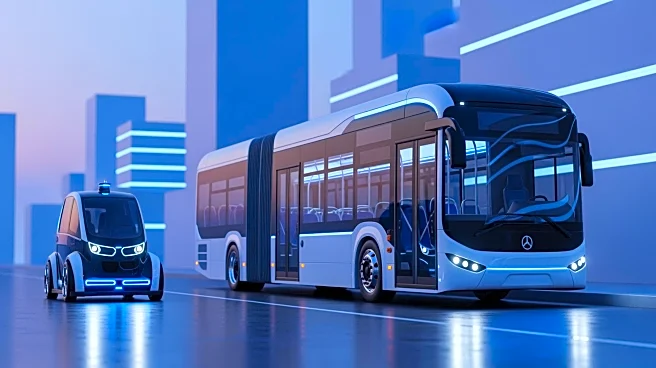
environmental impact. New York City's congestion pricing program has shown significant results, reducing traffic and pollution while increasing public transit use. Meanwhile, electric buses are being deployed globally, offering quieter and more cost-effective public transport options. Robotaxis are also being trialed in major cities, promising to revolutionize urban mobility.
Why It's Important?
The shift towards electrified and autonomous urban transport systems represents a significant step in addressing climate change and urban congestion. These developments have the potential to transform city landscapes, making them more sustainable and efficient. The adoption of these technologies can lead to reduced emissions, improved air quality, and enhanced public transport systems. However, the transition also poses challenges, including infrastructure upgrades and regulatory hurdles, which cities must navigate to fully realize the benefits.
What's Next?
As cities continue to implement these technologies, the focus will be on integrating them into existing transport systems and addressing challenges such as infrastructure and regulatory frameworks. The success of these initiatives will depend on effective policy-making and collaboration between government, industry, and communities. Future developments may include expanded trials of autonomous vehicles, further electrification of public transport fleets, and the implementation of smart city technologies to optimize traffic management.