
What's Happening?
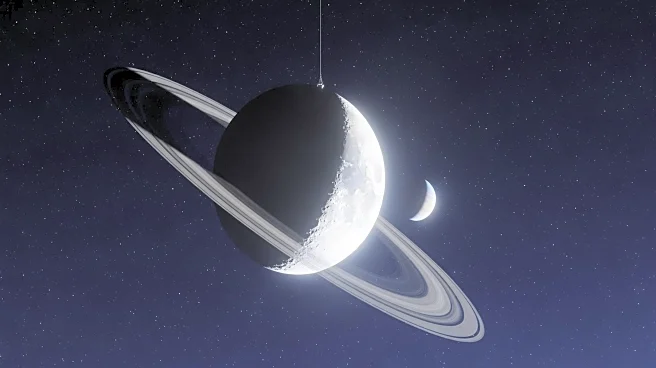
On January 23, 2026, a rare astronomical event will occur as Saturn and the moon appear close together in the night sky, a phenomenon known as a conjunction. This event provides an opportunity for both
astronomers and casual stargazers to observe these celestial bodies seemingly near each other, despite being millions of miles apart. The conjunction will be visible in the western sky after sunset, with the moon in a waxing crescent phase, nearly 24% full. The visibility of this event will depend on the cloud cover, and it is best observed with a clear view of the sky. The conjunction is part of a series of celestial attractions visible from Earth, offering a chance to see multiple worlds in our solar system at once.
Why It's Important?
The Saturn and moon conjunction is significant as it highlights the dynamic nature of our solar system and provides an educational opportunity for the public to engage with astronomy. Such events can inspire interest in space science and foster a greater appreciation for the universe. For astronomers, it offers a chance to study the alignment of celestial bodies and gather data on their movements. For the general public, it is a chance to witness a rare and beautiful natural phenomenon, potentially sparking interest in further astronomical exploration and education.
What's Next?
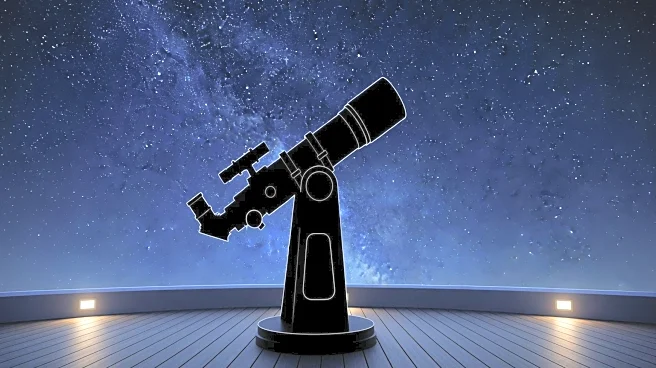
Skywatchers are encouraged to prepare for the event by checking local weather forecasts to ensure clear skies. Those interested in observing the conjunction should look to the western sky after sunset on January 23. The event is visible to the naked eye, but binoculars or telescopes can enhance the viewing experience. As the date approaches, astronomy enthusiasts and educational institutions may organize viewing events to share this experience with the community.