





What's Happening?
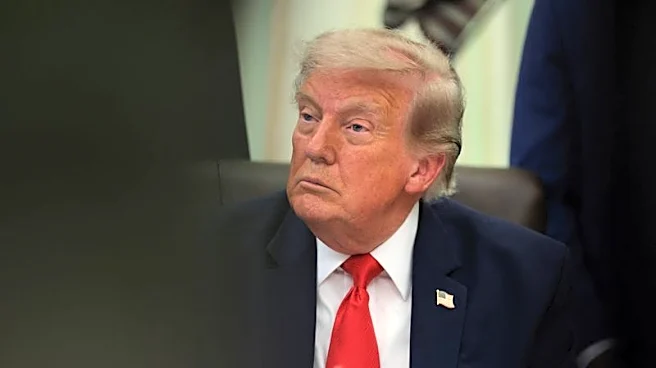
Ezra Jin Mingri, a senior pastor from China, was released after spending 266 days in detention. His release followed diplomatic efforts between the United States and China, including President Trump raising Jin's case with Chinese leader Xi Jinping. Jin,
who entered the U.S. on July 4, reunited with his family for the first time in eight years. His detention was part of a broader crackdown on unregistered religious congregations in China, which began with a Sinicization campaign in 2015. This campaign aimed to align religious practices with Communist Party ideologies. Jin's church, Beijing Zion Church, faced closure in 2018, and its services moved online during the COVID-19 pandemic. Despite his release, Jin continues to advocate for the freedom of eight other church leaders still detained.
Why It's Important?
The release of Ezra Jin Mingri highlights the complex diplomatic relations between the U.S. and China, particularly concerning human rights and religious freedom. This case underscores the ongoing tension over China's treatment of religious minorities and the international pressure it faces. For the U.S., advocating for religious freedom is a significant aspect of its foreign policy, and this incident may influence future diplomatic engagements with China. The situation also reflects the broader issue of religious suppression in China, where unregistered congregations face significant challenges. The outcome of this case could impact the strategies of religious advocacy groups and the U.S. government's approach to human rights diplomacy.
What's Next?
Ezra Jin Mingri plans to continue his advocacy for the release of the remaining detained church leaders. This ongoing effort may involve further diplomatic discussions between the U.S. and China. The broader implications for U.S.-China relations could include increased scrutiny of China's human rights practices and potential policy adjustments by the U.S. government. Additionally, religious advocacy groups may intensify their efforts to highlight similar cases, potentially leading to more international pressure on China. The situation could also influence China's domestic policies regarding religious freedom and the treatment of unregistered religious groups.
Beyond the Headlines
The case of Ezra Jin Mingri sheds light on the ethical and legal challenges faced by religious minorities in China. The use of family members as leverage in legal proceedings raises questions about due process and human rights. This situation also highlights the cultural tensions between state-imposed ideologies and religious beliefs. The long-term impact of such cases may lead to shifts in China's legal framework and international relations, as well as influence the global discourse on religious freedom and human rights.