






What's Happening?
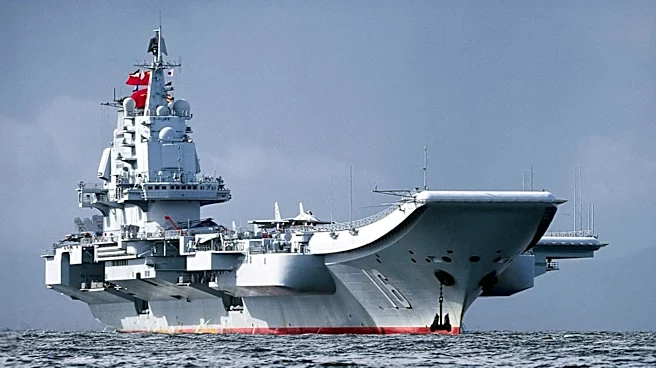
China has concentrated nearly 300 military aircraft across 11 airbases in its western region, a 44% increase compared to a similar exercise last year, according to satellite imagery. This deployment includes 43 J-20 stealth fighters, 43 J-10 fighters, 93
J-11 and J-16 fighters, 20 H-6 bombers, 16 KJ-500 airborne early warning aircraft, 27 Y-20 transport and refueling aircraft, 25 special-mission aircraft, and 12 JH-7 fighter-bombers. The aircraft began arriving in mid-October, with the concentration believed to be associated with 'Red Sword,' one of the People's Liberation Army Air Force's largest annual combat training exercises. U.S. defense analysts are questioning the scale and purpose of these operations, particularly how China is testing its newer J-20 stealth fighters alongside conventional aircraft and support systems. The deployment is distinct from China's more visible military exercises around Taiwan, as these aircraft are located in areas associated with the Western Theater Command, responsible for operations bordering India.
Why It's Important?
This significant military aircraft buildup is important for the U.S. as it indicates China's ongoing and accelerating military modernization and its capacity for large-scale air operations. The deployment of advanced stealth fighters and a diverse range of support aircraft suggests China is enhancing its ability to conduct complex, integrated air warfare. For the U.S., this raises concerns about regional stability, particularly in the Indo-Pacific, and the potential for increased military assertiveness by China. It also provides valuable intelligence for U.S. defense planners to assess China's operational capabilities, logistical support, and command and control structures. The scale of the exercise could influence U.S. defense spending, strategic alliances, and the development of countermeasures, as it highlights the evolving military balance in the region.
What's Next?
U.S. defense analysts will continue to monitor China's military activities, particularly the 'Red Sword' exercise, to gain further insights into its operational doctrines and capabilities. The U.S. government and its allies may respond by increasing their own intelligence gathering efforts, conducting joint military exercises, and potentially accelerating the development and deployment of advanced defense systems. This buildup could also lead to heightened diplomatic discussions regarding regional security and transparency in military activities. The long-term implications include a potential arms race in advanced military aviation and a more complex strategic environment in Asia, requiring continuous adaptation of U.S. defense policies and strategies.
Beyond the Headlines
The concentration of military aircraft in China's western region has deeper implications beyond immediate military readiness. It highlights China's strategic focus on developing a robust, multi-domain military capable of projecting power across various theaters. This development could influence global military technology trends, as other nations observe and potentially emulate China's advancements in integrated air operations. Ethically, the increased military presence and advanced weaponry raise questions about regional stability and the potential for miscalculation or escalation in disputed territories. Culturally, such large-scale military displays reinforce nationalistic narratives and project an image of strength, both internally and externally. The long-term impact could be a recalibration of international security frameworks and a more competitive geopolitical landscape, where military technological superiority plays an increasingly central role.