


What's Happening?
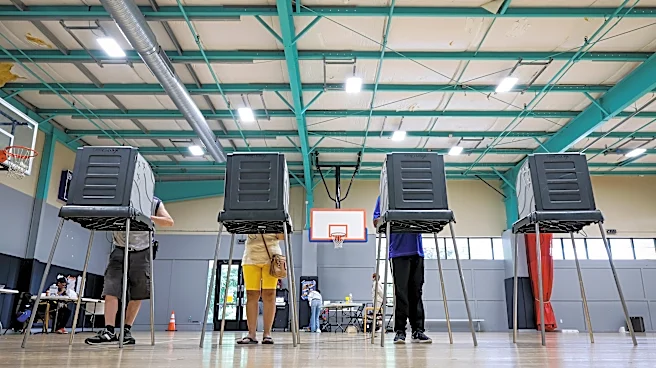
Wyoming Governor Mark Gordon has requested the state's attorney general to investigate the conduct of federal election monitors during the state's primary election on August 18. Governor Gordon described the observers' behavior as "aggressive" and "irregular."
This concern was echoed by Laramie County Clerk Debra Lee, who noted a "complete disregard" for state law by the federal observers. While Governor Gordon clarified that his objection was not to the presence of observers themselves, but rather to their actions, which he believes exceeded the authority granted by Congress, the specific details of the alleged aggressive or irregular conduct were not provided in the source. The request for an investigation highlights a potential conflict regarding the scope and manner of federal oversight in state-level electoral processes.
Why It's Important?
This incident is important as it raises questions about the balance of power and jurisdiction between federal and state authorities in election oversight. The involvement of federal election observers is intended to ensure fair and lawful elections, but accusations of "aggressive" and "irregular" conduct could undermine public trust in the electoral process and lead to increased scrutiny of federal intervention. If the investigation confirms that federal observers overstepped their authority, it could prompt calls for clearer guidelines or limitations on their roles, potentially affecting future election monitoring practices across the U.S. This situation could also fuel ongoing debates about states' rights versus federal mandates, particularly in the sensitive area of election administration. The outcome of this investigation could set a precedent for how federal election observers operate in other states, influencing the perceived legitimacy and fairness of elections nationwide.
What's Next?
The immediate next step is the investigation by the Wyoming Attorney General's office into the conduct of the federal election monitors. The findings of this investigation will likely determine any further actions taken by the state of Wyoming. Depending on the attorney general's report, Governor Gordon may pursue formal complaints with federal agencies or advocate for legislative changes to clarify the roles and boundaries of federal election observers. This situation could also lead to a broader discussion among state election officials and federal authorities regarding best practices for election monitoring to prevent similar conflicts in the future. The incident may also prompt federal agencies to review their training and protocols for election observers to ensure their conduct aligns with established legal frameworks and respects state sovereignty.
Beyond the Headlines
Beyond the immediate investigation, this event touches upon deeper issues concerning federalism and the integrity of democratic processes. The tension between federal oversight and state autonomy in elections is a recurring theme in U.S. politics. Accusations of overreach by federal agents, even in the context of ensuring election integrity, can be perceived as an infringement on state sovereignty and can contribute to a narrative of federal government overreach. This incident could exacerbate existing political polarization, particularly if it is framed as a partisan issue. It also underscores the importance of clear communication and defined roles for all parties involved in election administration to maintain public confidence and prevent disputes that could cast doubt on election results. The long-term implications could include a re-evaluation of federal election monitoring policies and potentially new legislation aimed at delineating federal and state responsibilities more precisely.