


What's Happening?
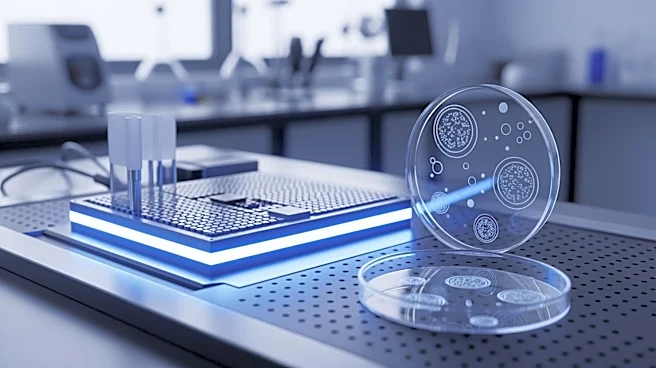
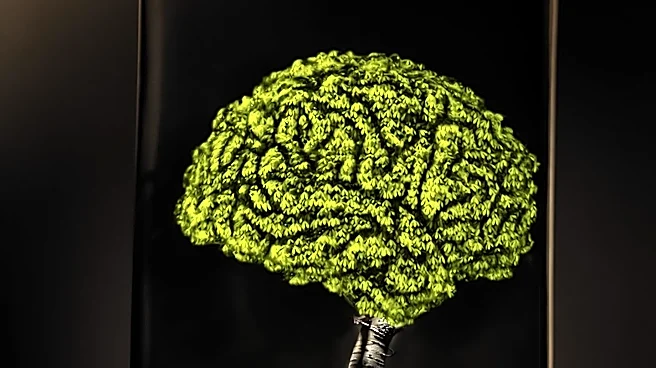
Researchers at North Carolina State University have developed CAMEO, a new sensor technology that uses carbon nanotube microelectrode arrays to monitor electrical activity in human cerebral organoids. This innovation addresses the high costs and limitations
of traditional electrophysiological techniques, which often restrict studies to fewer than ten organoids. CAMEO's design allows for scalable and affordable monitoring, enhancing the statistical power and robustness of research findings. The technology is particularly promising for studying neurodevelopmental disorders like Angelman syndrome, where direct access to human brain tissue is not feasible.
Why It's Important?
CAMEO represents a significant advancement in the field of neuroscience, providing researchers with a more accessible and cost-effective tool for studying brain development and disorders. By enabling large-scale studies, this technology could accelerate the discovery of new treatments and improve our understanding of complex neurological conditions. The affordability and scalability of CAMEO also democratize access to high-quality electrophysiological data, fostering collaboration and data standardization across the scientific community. This could lead to more rapid advancements in neurogenetic research and therapeutic development.
What's Next?
The development team plans to explore the application of CAMEO in other three-dimensional tissue models and bioengineered constructs, potentially expanding its use in biomonitoring and synthetic biology. The technology also holds promise for integration with brain-computer interfaces and advanced neuroprosthetics. Researchers are working to protect the intellectual property surrounding CAMEO, with an eye towards commercialization to ensure quality and support. The project has received funding from the Foundation for Angelman Syndrome Therapeutics and the National Science Foundation, highlighting its potential impact on human health.