







What's Happening?
The Hunger Task Force Farm in Milwaukee County is actively prioritizing sustainability, stewardship of natural areas, and regenerative agriculture in its operations. The farm serves as a crucial source of fresh produce, harvesting hundreds of thousands
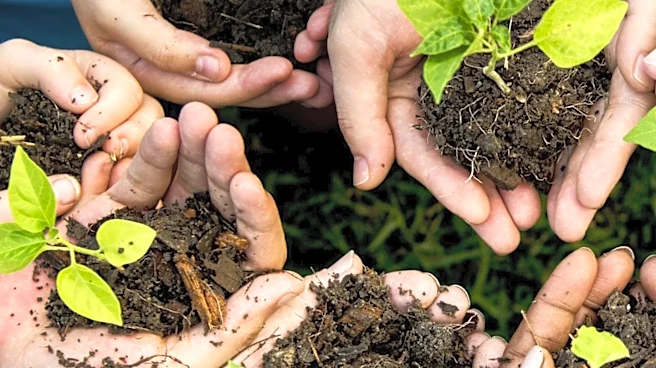
of pounds of fruits and vegetables annually with the help of community volunteers. These crops are distributed free of charge to a network of food pantries, meal programs, and shelters, serving over 50,000 people each month across Milwaukee County. Adam Romanak and Jordan Leitner, the farm's sustainability experts, lead efforts to nurture soil health and preserve the ecosystem. They have successfully reduced synthetic inputs by over 15%, contributing to an increased average yield per acre for corn production. The farm also implements a robust cover cropping program, which has enhanced sustainability, efficiency, and reduced operational costs. A seven-year crop rotation plan is in place to continuously build soil health, aiming for healthier, more nutrient-dense crops and reduced pest and disease pressure.
Why It's Important?
The Hunger Task Force Farm's commitment to sustainable and regenerative agriculture is vital for several reasons. Firstly, it ensures the long-term viability of the farm, allowing it to continue providing fresh, healthy food to food-insecure households in Milwaukee County. By focusing on soil health and reducing synthetic inputs, the farm produces higher quality, more nutrient-dense crops, directly benefiting the health of the community it serves. This approach also minimizes environmental impact, promoting biodiversity and responsible land management. Furthermore, the farm's model demonstrates how sustainable agricultural practices can be integrated with humanitarian efforts, offering a replicable model for other communities. The distribution of free, fresh produce addresses a critical need, as access to healthy food is often limited for low-income populations, contributing to better health outcomes and food security.
What's Next?
The Hunger Task Force Farm will continue to implement and refine its sustainable farming practices, with an ongoing focus on reducing synthetic inputs and enhancing soil health through methods like cover cropping and long-term crop rotation. The farm's sustainability experts, Adam Romanak and Jordan Leitner, will likely explore further innovations in regenerative agriculture to increase yields and improve the nutritional quality of their produce. The organization will also continue to rely on community volunteers for harvesting, fostering community engagement and education about sustainable food systems. The free distribution of fresh fruits and vegetables to local food pantries, meal programs, and shelters will remain a core component of their mission, ensuring that the benefits of their sustainable practices reach those most in need across Milwaukee County. The farm's success could also inspire other food assistance programs to adopt similar environmentally conscious approaches.
Beyond the Headlines
The Hunger Task Force Farm's initiative goes beyond simply providing food; it embodies a holistic approach to community well-being that intertwines food security with environmental stewardship. The emphasis on regenerative agriculture and soil health reflects a growing understanding that the quality of food is intrinsically linked to the health of the land it comes from. This model challenges conventional agricultural practices by demonstrating that high yields and nutritional value can be achieved through ecological methods, rather than heavy reliance on chemical inputs. Moreover, by involving community volunteers, the farm fosters a deeper connection between residents and their food sources, promoting education about sustainable practices and the importance of fresh produce. This initiative highlights the potential for local, community-based farms to play a significant role in addressing both food insecurity and environmental degradation, creating a more resilient and equitable food system.