

What's Happening?
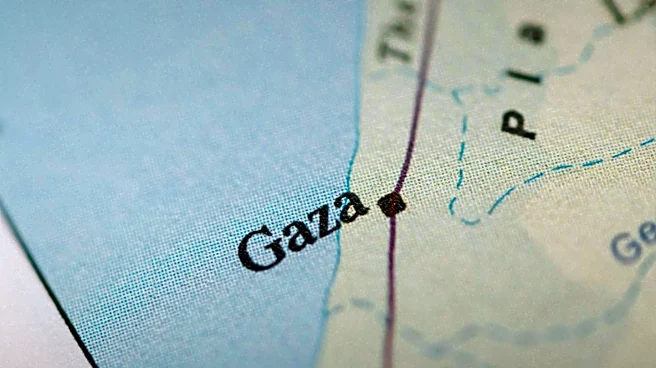
In Gaza, photographs are no longer serving their traditional role of preserving memories but have become stark reminders of the ongoing conflict and its devastating impact. According to a report, Palestinians in Gaza experience an unrelenting sense of loss,
with familiar places and structures being destroyed. The act of viewing old photographs now reopens wounds, contrasting past safety with present destruction. The camera, once a tool for documentation, is described as having become a 'rifle' that fires 'undying bullets' into the glass of screens, causing renewed pain each time a photo album is opened. This shift highlights how the conflict has altered the perception and emotional resonance of personal imagery for those living in the region.
Why It's Important?
This transformation in how photographs are perceived in Gaza underscores the profound psychological and emotional toll of prolonged conflict on a population. The inability to find solace or nostalgia in personal memories, instead encountering renewed trauma, indicates a deep societal wound. For U.S. audiences, this perspective offers a critical insight into the human cost of geopolitical tensions, moving beyond statistics to the intimate experiences of individuals. It highlights how conflict can warp fundamental aspects of daily life and personal history, making even seemingly innocuous objects like photographs sources of pain. This emotional impact can have long-term consequences for mental health and social cohesion, influencing future generations and potentially shaping regional dynamics.
Beyond the Headlines
The reinterpretation of photographs in Gaza raises significant ethical and cultural questions about the role of media and personal documentation in conflict zones. It challenges the conventional understanding of photography as a neutral medium for memory and history. Instead, it becomes an active participant in the experience of trauma, forcing a re-evaluation of how images are created, consumed, and preserved in contexts of extreme violence. This phenomenon could lead to a cultural shift where visual records are approached with caution, or even avoided, to prevent further emotional distress. It also highlights the potential for art and personal expression to become powerful forms of resistance and testimony, even as they inflict pain, by bearing witness to an altered reality.