
What's Happening?
Members of the House Homeland Security Committee and the House China Select Committee participated in a simulated Taiwan crisis to understand the potential impact of AI-backed cyberattacks on U.S. transportation
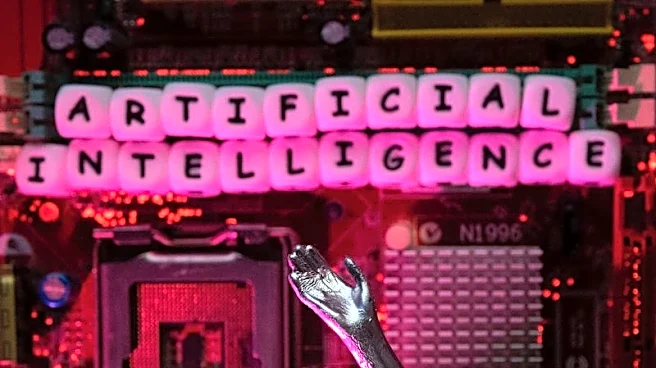
and logistics networks. The event, hosted by the Center for Strategic and International Studies, aimed to prepare U.S. officials for a fast-moving conflict involving China. The scenario depicted China launching a military exercise around Taiwan in 2027, raising concerns about a possible blockade or invasion. U.S. intelligence analysts suspect Chinese hackers targeted critical infrastructure to disrupt U.S. military deployments. The simulation included AI-related attacks, such as misinformation campaigns and prompt injections, highlighting the potential for AI to enhance cyber threats.
Why It's Important?
The simulation underscores the growing threat of AI-enabled cyberattacks in geopolitical conflicts, particularly involving China and Taiwan. The exercise highlights the vulnerabilities in U.S. critical infrastructure and the need for robust cybersecurity measures. As AI technology advances, the potential for more sophisticated cyberattacks increases, posing significant risks to national security. The event also emphasizes the importance of collaboration between government and private sector operators to defend against such threats. The U.S. must remain vigilant and proactive in addressing these challenges to protect its interests and maintain stability in the region.
What's Next?
The simulation may prompt U.S. lawmakers and defense officials to enhance cybersecurity strategies and invest in AI technologies to counter potential threats. There could be increased collaboration with private sector partners to secure critical infrastructure. Additionally, the U.S. may engage in diplomatic efforts to address tensions with China and prevent escalation in the Taiwan Strait. Ongoing assessments of AI capabilities and their implications for national security will likely continue, influencing future policy decisions and defense strategies.