





What's Happening?
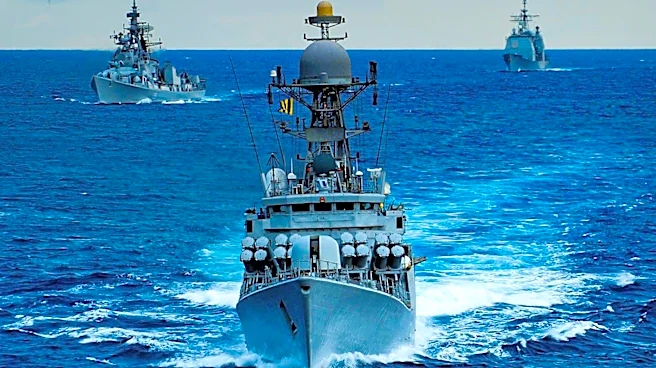
The USS Virginia, a nuclear-powered cruiser, was designed during the Cold War to counter Soviet naval threats. Commissioned in 1976, the ship featured two nuclear reactors and was capable of speeds over 30 knots. It was equipped with more than 80 missiles,
including Tomahawks and Harpoons, and participated in various military operations, including the Lebanon crisis and Operation Desert Storm. Despite its advanced capabilities, the ship was decommissioned in 1994 due to the high costs of nuclear propulsion and the emergence of more modern Aegis-equipped ships.
Why It's Important?
The USS Virginia represents a significant chapter in naval history, showcasing the strategic importance of nuclear-powered surface ships during the Cold War. Its design and capabilities reflected the U.S. Navy's emphasis on maintaining a technological edge over adversaries. The ship's decommissioning highlights the challenges of balancing advanced military technology with cost-effectiveness and the need for modernization. The lessons learned from the USS Virginia continue to inform naval strategy and the development of future naval vessels.
Beyond the Headlines
The USS Virginia's story underscores the broader implications of nuclear propulsion in naval warfare. While offering unmatched endurance and speed, nuclear-powered ships require specialized infrastructure and training, which can limit their deployment. The transition to more cost-effective and versatile Aegis-equipped ships reflects a shift in naval priorities towards integrated defense systems and multi-mission capabilities. The legacy of the USS Virginia continues to influence naval engineering and strategic planning.