






What's Happening?
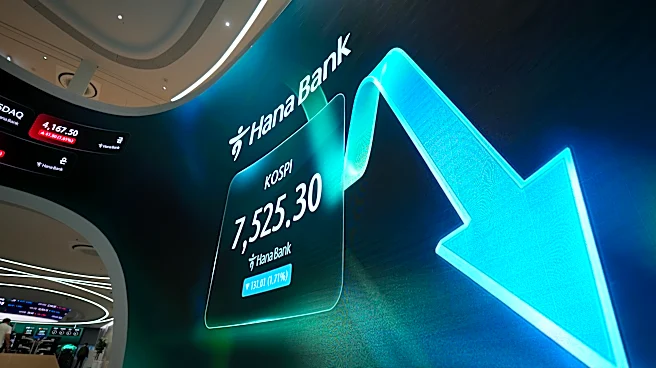
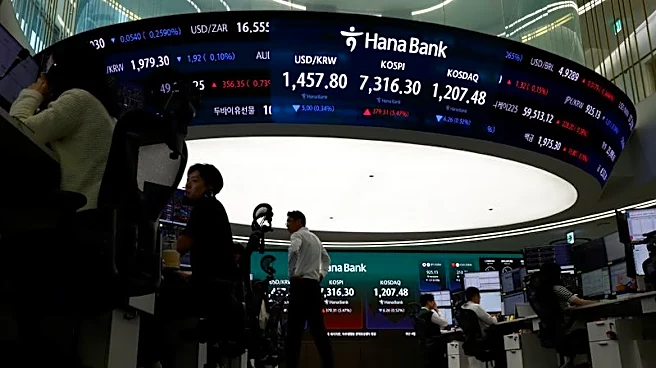
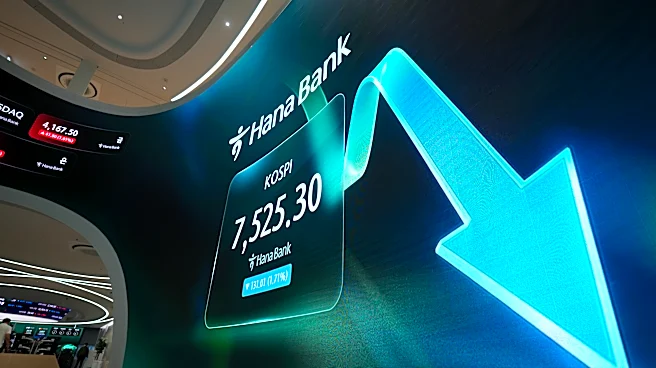
South Korea's Kospi index, previously the world's best-performing stock market this year, has entered bear territory. The index fell more than 5% on a recent Wednesday, marking a 20% drop from its June 19 record high. This decline is attributed to global
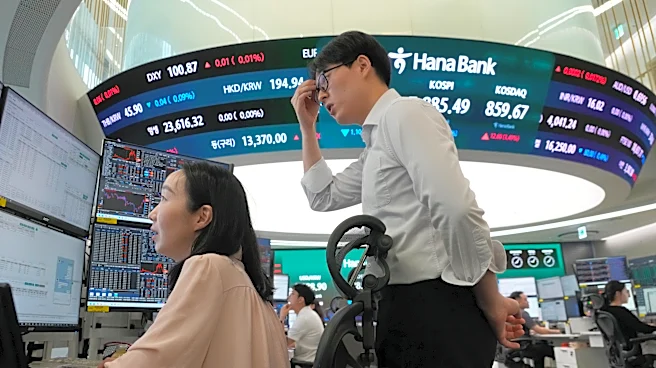
investors' growing skepticism about artificial intelligence (AI) investments and the market's heavy reliance on major chipmakers like Samsung Electronics and SK Hynix. Despite strong earnings reports from these companies, concerns about the sustainability of AI demand and the pace of earnings growth have led to a valuation adjustment. The Kospi's volatility index has surged over 200% since the start of the year, reflecting increased market fluctuations driven by news flows and retail fund movements.
Why It's Important?
The Kospi's downturn highlights the risks associated with market concentration and the volatility of AI-related investments. As AI plays a central role in South Korea's stock market, shifts in investor sentiment can lead to significant market swings. This situation underscores the broader challenges faced by markets heavily reliant on specific sectors or technologies. The correction in the Kospi may serve as a cautionary tale for other markets with similar dependencies, emphasizing the need for diversification and careful risk management. The outcome of this market adjustment could influence global investment strategies and perceptions of AI's long-term viability.
What's Next?
As the Kospi navigates this bear territory, investors and market analysts will closely monitor the stabilization of global risk sentiment. The potential for foreign investors to return to the Korean market depends on the resolution of current uncertainties and the perceived stability of AI demand. Additionally, the ongoing evaluation of market fundamentals versus speculative trends will shape future investment decisions. The response of major stakeholders, including financial institutions and policymakers, will be crucial in determining the market's recovery trajectory and the broader implications for the global AI supply chain.