






What's Happening?
Typhoon Bavi, classified as a 'Large' typhoon by the Japan Meteorological Agency, recently impacted several regions in Asia, including the Marianas Islands, Taiwan, and parts of Japan. The typhoon's wind field extended 750 km, affecting areas like Taiwan and Japan's
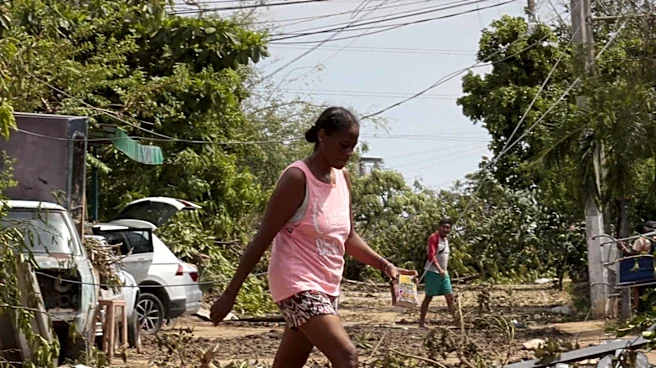
Nansei Islands. Despite its size, mainland Japan ports remained largely unaffected. The typhoon transitioned to an extratropical low on July 15. The aftermath of Typhoon Bavi led to ferry cancellations, cargo suspensions, and power disruptions in affected regions. In Taiwan, major commercial ports suspended operations, and over 1,200 flights were canceled or delayed. Despite the disruptions, Taiwan's modern port infrastructure sustained limited physical damage.
Why It's Important?
The impact of Typhoon Bavi highlights the vulnerability of global supply chains to natural disasters. While the U.S. was not directly affected, disruptions in Asia can have ripple effects on international trade and logistics, potentially affecting U.S. businesses reliant on Asian imports. The typhoon's impact on ports and transportation networks underscores the importance of robust infrastructure and disaster preparedness in mitigating economic losses. Additionally, the event serves as a reminder of the interconnectedness of global economies and the potential for distant events to influence U.S. markets and industries.
What's Next?
As Typhoon Bavi transitions to an extratropical low, affected regions will focus on recovery and resuming normal operations. Ports and transportation networks will work to clear backlogs and restore services. The event may prompt a review of disaster preparedness and response strategies in affected areas, potentially leading to infrastructure improvements and policy changes. For U.S. businesses, monitoring the recovery process and assessing potential impacts on supply chains will be crucial. The situation also highlights the need for ongoing collaboration between international stakeholders to enhance resilience against future disruptions.