






What's Happening?
The Arkansas Game & Fish Commission (AGFC) has released its weekly fishing report, detailing current conditions and successful techniques across various water bodies in Arkansas. On the Little Red River, fall fishing is commencing with comfortable temperatures,
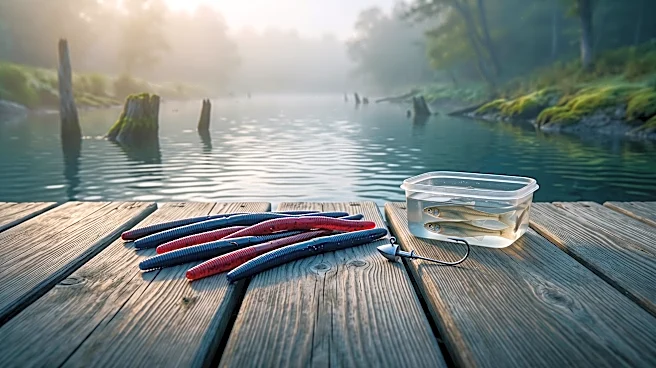
and anglers are finding success early mornings and late afternoons, particularly with San Juan Worms, egg patterns, and midge patterns. Wadeable water is excellent around JFK Park and Swinging Bridge access, while boat fishing is productive in deeper sections and around moss beds. At Trusten Holder WMA, bass and crappie fishing has been productive in backwaters and along channel edges, with crappie biting on blue-and-black or red-and-black Texas-rigged worms, and bass on shad-colored crankbaits. The White River at Clarendon is seeing crappie caught with jigs and minnows around brush, and bass near shad concentrations. Lake Conway Nursery Pond, stocked with mature bass, crappie, catfish, and bream, offers good fishing as Lake Conway undergoes renovation. Harris Brake Lake is experiencing low water levels, but anglers are catching largemouth bass with floating jigs and some crappie. Peckerwood Lake, also at a low level, is a prime spot for crappie fishing with jigs and minnows around stumps, though it will close to fishing on October 31 for waterfowl season.
Why It's Important?
This weekly fishing report is crucial for Arkansas's recreational fishing community and local economies that depend on outdoor tourism. By providing detailed, up-to-date information on fishing conditions, successful baits, and specific locations, the AGFC enables anglers to maximize their chances of success, thereby encouraging participation in the sport. This sustained interest supports bait and tackle shops, guide services, and other related businesses. The report also highlights the impact of environmental factors, such as water levels and generation schedules, on fishing, underscoring the importance of water management for both ecological health and recreational activities. The renovation of Lake Conway and the temporary closure of Peckerwood Lake for waterfowl season demonstrate the dynamic management strategies employed to balance various ecological and recreational needs, affecting local fishing opportunities and potentially redirecting angler traffic to other productive areas mentioned in the report.
What's Next?
Anglers in Arkansas should continue to monitor the AGFC's weekly reports for updates on fishing conditions, especially as fall progresses and water temperatures continue to drop. The Little Red River is expected to maintain good fall fishing, with generation schedules influencing optimal fishing times. For Peckerwood Lake, anglers have a limited window until October 31 before it closes for waterfowl season, after which they will need to seek alternative fishing spots. The renovation of Lake Conway will continue, with the Nursery Pond serving as an interim option. Local businesses catering to anglers, such as bait shops and guide services, will likely adjust their offerings and recommendations based on these ongoing conditions and closures. Additionally, the AGFC will likely continue to monitor water levels and fish populations across the state to inform future stocking and management decisions, ensuring sustainable fishing opportunities.
Beyond the Headlines
The detailed fishing report from the Arkansas Game & Fish Commission reflects a broader trend in natural resource management: the integration of real-time data and public communication to enhance recreational activities while balancing conservation efforts. The mention of specific fly patterns, bait types, and fishing techniques not only serves practical purposes for anglers but also subtly educates them on the ecological nuances of different water bodies and fish species. The impact of water generation schedules on fishing success on the Little Red River, for instance, highlights the complex interplay between human infrastructure (dams) and natural ecosystems. Furthermore, the temporary closure of Peckerwood Lake for waterfowl season illustrates the multi-use management of public lands and waters, where different recreational and conservation priorities are balanced throughout the year. This approach fosters a deeper understanding and appreciation among the public for the intricate management required to sustain diverse outdoor experiences.