








What's Happening?
The Food and Agriculture Organization (FAO) of the United Nations has issued a warning about the global fertilizer scarcity resulting from disruptions in the Strait of Hormuz. This scarcity is expected to lead to lower agricultural yields and tighter
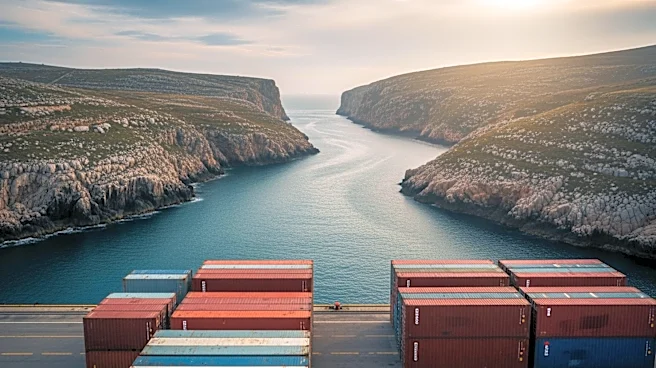
food supplies in the latter half of 2026 and into 2027. The FAO Director-General, QU Dongyu, highlighted the strategic importance of the Strait, which is a critical corridor for global trade in oil, liquefied natural gas, sulfur, and fertilizers. The current crisis is affecting food production, trade, and access to agricultural inputs worldwide.
Why It's Important?
The disruption in the Strait of Hormuz poses a significant threat to global food security, particularly affecting countries that are heavily dependent on imported fertilizers. The crisis could exacerbate existing food insecurity in vulnerable regions, leading to higher food prices and increased economic strain. The situation underscores the interconnectedness of global supply chains and the potential for geopolitical tensions to impact essential commodities. The FAO's call for coordinated international action highlights the need for alternative trade routes and sustainable agricultural practices to mitigate the crisis's impact.
What's Next?
The FAO has outlined several priority areas for action, including maintaining supply chain functionality, supporting farmers' access to inputs, and protecting humanitarian supply chains. In the medium term, there is a need for regional coordination and diversification of fertilizer and energy sources. Long-term strategies involve structural transformations to reduce dependency on concentrated supply routes and fossil fuel-based inputs. The FAO's commitment to providing technical analysis and policy support will be crucial in addressing the evolving challenges in global agrifood systems.