






What's Happening?
African countries are experiencing significant economic challenges due to new decarbonization measures in the maritime and aviation sectors. These measures, including the EU's Emissions Trading System (ETS) and proposed IMO Net-Zero Fund, are driving
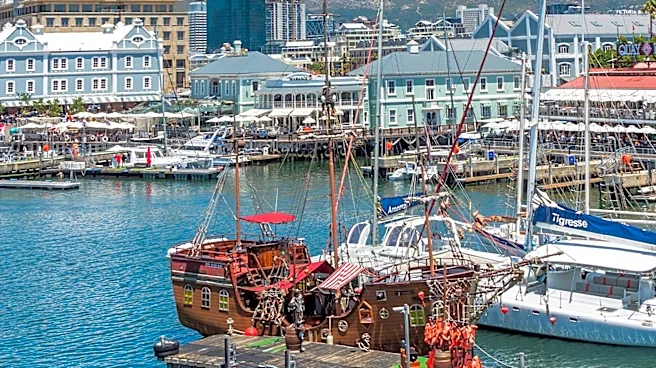
up operational costs for African airlines and shipping operators. African airlines, which are in an early stage of development but crucial for intra-African trade, are particularly affected by soaring fuel costs and higher costs of capital, making it difficult to invest in fuel-efficient vehicles. Additionally, African nations face elevated sustainable fuel costs due to limited domestic production and smaller fleet sizes, which prevent them from negotiating bulk discounts. The continent relies on maritime transport for 90% of its trade by volume, meaning increased shipping costs are passed down supply chains, making imports more expensive and reducing the competitiveness of African exports. Analysis by University College London indicates that these costs could lead to a 20% increase in fertilizer and petrol imports for Malawi and a 4.3% increase in fish export costs for Namibia, impacting food security and industrial development.
Why It's Important?
The disproportionate economic burden on African nations from global decarbonization efforts in maritime and aviation highlights a critical equity issue in climate policy. While the goal of decarbonization is universally important, the current design and implementation of these measures risk undermining economic development and food security in African countries. The EU's policy of confining generated funds from its ETS within the EU means a net transfer of resources from African companies to the EU, rather than supporting decarbonization efforts or mitigating impacts in Africa. This approach contrasts with the proposed IMO Net-Zero Fund, which would allow funds to be used by developing countries to offset development impacts, including food security. The increased costs for essential imports like fertilizer and petrol directly threaten food production and the livelihoods of millions, while higher export costs reduce Africa's competitiveness in global markets. This situation underscores the need for international climate policies to consider the unique vulnerabilities and developmental stages of different regions, ensuring a just transition that does not exacerbate existing inequalities.
What's Next?
African countries are advocating for a more equitable approach to decarbonization, arguing that unilateral measures should be withdrawn upon the implementation of multilateral ones. They are also pushing for mechanisms that allow funds generated from decarbonization efforts to be used to offset development impacts, such as food security, within their own regions. The ongoing negotiations for the IMO Net-Zero Fund are crucial in this regard, as its design could significantly influence how the financial burdens and benefits of maritime decarbonization are distributed globally. The inconsistencies in regulatory duplication and the use of generated funds between different decarbonization schemes (e.g., EU ETS, CORSIA, IMO NZF) will likely remain a key point of contention. African nations will continue to emphasize the need for policies that support their economic growth and food security while contributing to global climate goals, rather than imposing prohibitive costs that hinder their development.
Beyond the Headlines
The challenges faced by African nations in maritime and aviation decarbonization extend beyond immediate economic costs, touching upon broader issues of climate justice and international cooperation. The current framework risks creating a two-tiered system where developed nations implement policies that inadvertently penalize developing economies, hindering their ability to achieve sustainable development goals. This situation raises ethical questions about the responsibility of historical emitters to support climate action in less developed countries. Furthermore, the lack of local sustainable fuel production and the inability to secure bulk discounts highlight a systemic disadvantage that requires targeted investment and technology transfer. Addressing these disparities will necessitate a re-evaluation of global climate governance, moving towards more inclusive and supportive frameworks that consider the diverse capacities and needs of all nations. The outcome of these negotiations will set a precedent for how future global environmental challenges are tackled, determining whether they foster collective progress or deepen existing divides.