











What's Happening?
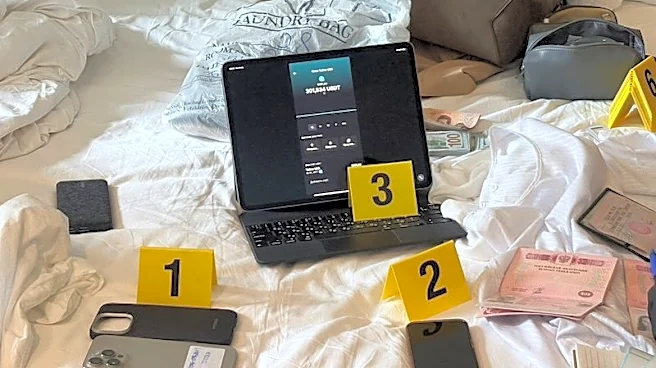
The US Justice Department has unsealed an indictment against three Russian nationals and two companies, ML.Cloud and Media Land, for allegedly operating cybercrime services. The individuals, Aleksandr Alexandrovich Volosovik, Kirill Andreevich Zatolokin,
and Yulia Pankova, are accused of providing bulletproof hosting services to various threat actors, including profit-driven gangs and state-sponsored groups. These services facilitated phishing, DDoS attacks, brute-force attacks, ransomware, and the hosting of cybercrime marketplaces and forums. The infrastructure of ML.Cloud and Media Land spanned multiple countries, including China, the Netherlands, Finland, and the United States. The indictment, originally returned in December 2024, was unsealed recently, revealing that these services targeted at least 42 entities across 21 US states, resulting in tens of millions of dollars in losses.
Why It's Important?
This development underscores the ongoing threat of international cybercrime and the challenges in combating it. The indictment highlights the significant financial impact on US entities, emphasizing the need for robust cybersecurity measures and international cooperation in law enforcement. The US government's decision to offer a reward of up to $10 million for information on the operators of ML.Cloud and Media Land reflects the seriousness of the threat posed by such cybercrime services. This case also illustrates the complexities of prosecuting cybercriminals operating across borders, particularly when they are based in countries with strained diplomatic relations with the US.
What's Next?
The unsealing of the indictment may lead to increased diplomatic and law enforcement efforts to apprehend the accused individuals. The US may seek cooperation from international partners to track down and prosecute those involved. Additionally, the offer of a reward and possible relocation for informants could incentivize insiders to provide critical information. This case may also prompt further sanctions against individuals and entities involved in cybercrime, as well as increased scrutiny of bulletproof hosting services globally.