



What's Happening?
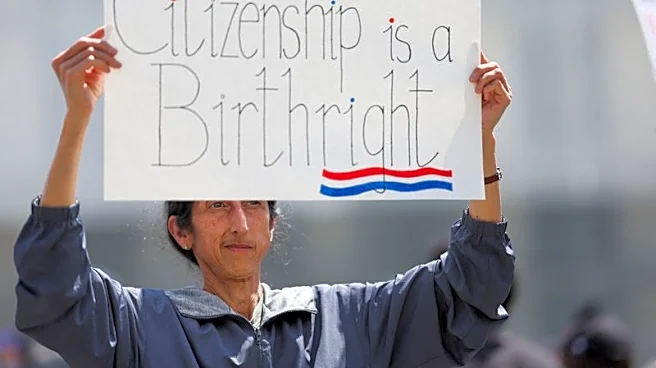
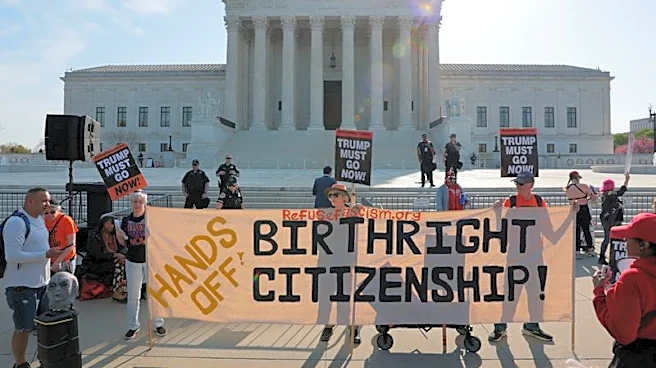
The U.S. Supreme Court is set to review an executive order by President Trump that aims to end birthright citizenship. This legal challenge has drawn significant attention as it questions the interpretation of the 14th Amendment, which grants citizenship to all individuals
born on U.S. soil. Northwestern University professor and historian Kate Masur discussed the historical context and potential implications of this case. The executive order, if upheld, could alter the longstanding practice of granting citizenship to children born in the United States, regardless of their parents' immigration status. The case has sparked debates about constitutional rights and immigration policies, with potential consequences for millions of individuals currently residing in the U.S.
Why It's Important?
The Supreme Court's decision on this matter could have profound implications for U.S. immigration policy and constitutional law. If the court upholds President Trump's order, it could lead to significant changes in how citizenship is determined, potentially affecting millions of people born in the U.S. to non-citizen parents. This case also highlights the ongoing national debate over immigration and the interpretation of the 14th Amendment. The outcome could influence future legislative and executive actions regarding immigration and citizenship, impacting social and political dynamics across the country.
What's Next?
As the Supreme Court prepares to hear arguments, various stakeholders, including civil rights organizations, legal experts, and political leaders, are likely to weigh in on the potential ramifications. The decision could prompt legislative responses or further legal challenges, depending on the outcome. Additionally, the case may influence public opinion and political discourse on immigration policy, particularly in the context of upcoming elections.