






What's Happening?
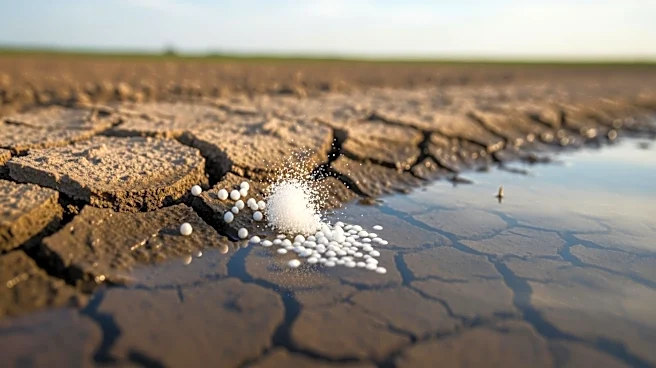
A study published in Nature Water has revealed that the widespread use of urea fertilizer is significantly degrading water quality in the Canadian Prairies. Researchers from the University of Manitoba and the University of Regina conducted experiments
by adding urea to farm ponds, simulating agricultural fertilization effects. The results showed a dramatic increase in algae growth, leading to oxygen depletion in the water. This phenomenon was observed in nearly half of the Prairie lakes, wetlands, and reservoirs, indicating a severe impact from decades of urea use. The study also highlighted similar vulnerabilities in agricultural regions in China and the United States. Dr. Cale Gushulak, the lead author, emphasized the global nature of the problem, noting that urea accounts for over half of global fertilizer use. The research suggests that the issue is exacerbated by the mismanagement of wetlands, which are crucial for filtering agricultural runoff.
Why It's Important?
The findings of this study have significant implications for agricultural practices and environmental management. Urea fertilizer, while essential for supporting two-thirds of the world's population, poses a threat to freshwater ecosystems when mismanaged. The degradation of water quality due to excessive algae growth and oxygen loss can lead to fish kills, increased toxin exposure, and harmful algal blooms. These ecological impacts threaten the sustainability of agricultural productivity in the Prairies, which rely on healthy water sources. The study underscores the need for better management of wetlands to prevent fertilizer runoff and protect water quality. This research could influence policy changes in agricultural and environmental management, aiming to balance the benefits of fertilizer use with the preservation of freshwater ecosystems.
What's Next?
The study calls for a reevaluation of wetland management practices to mitigate the negative impacts of urea fertilizer on water quality. Researchers suggest that preserving natural wetlands could serve as biological filters, reducing the export of fertilizers to freshwater bodies. This approach may require policy shifts and increased investment in wetland conservation. Additionally, the findings could prompt further research into alternative fertilization methods or technologies that minimize environmental impact. Stakeholders, including policymakers, environmental groups, and the agricultural industry, may need to collaborate to develop sustainable solutions that protect water resources while maintaining agricultural productivity.
Beyond the Headlines
The study highlights a broader environmental challenge that extends beyond the Canadian Prairies. As global reliance on urea and other nitrogen fertilizers continues, the ecological tipping point observed in the Prairies could become a widespread issue. The research suggests that the problem is not solely the use of fertilizers but the loss of natural filtration systems due to wetland drainage. This insight could lead to a shift in how agricultural landscapes are managed, emphasizing the importance of ecological balance. The findings may also spark discussions on the ethical responsibility of agricultural practices and their long-term impact on the environment.