




What's Happening?
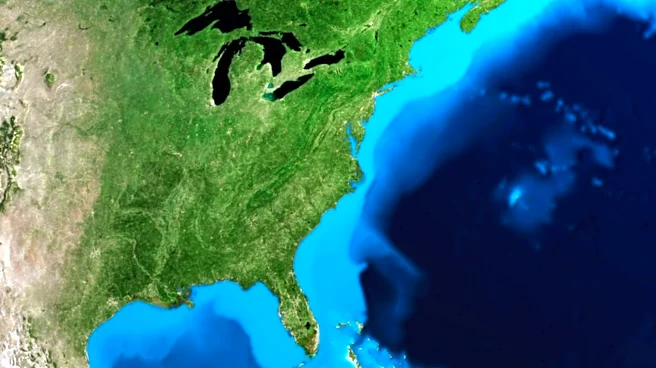
Florida is definitively classified as part of North America, a position supported by geographical, geological, and political frameworks. Geologically, Florida rests on the North American tectonic plate and is part of the continent's shelf, thousands of miles
north of the Darién Gap, which separates North and South America. Politically, Florida is one of the 50 states of the United States, a federal republic primarily located in North America. The United States is a founding member of the North American Free Trade Agreement (now USMCA) and a core participant in the North American Aerospace Defense Command (NORAD). Furthermore, the Organization of American States (OAS) includes all sovereign states in the Americas, and the United States, with Florida as one of its states, is a permanent member. This membership reinforces Florida's integral role within the North American diplomatic and security architecture. Despite its subtropical climate and strong Latin American cultural influences, which sometimes lead to confusion, Florida's continental classification remains firmly North American.
Why It's Important?
The clear classification of Florida as part of North America, as affirmed by its membership in the Organization of American States (OAS) and its geographical and political ties, is crucial for several reasons. It solidifies Florida's role within North American trade agreements like the USMCA and defense structures such as NORAD, impacting economic and security policies. For businesses, this clarity helps in strategic planning, investment, and market analysis, as Florida's economic landscape is intrinsically linked to the broader North American market. For policymakers, understanding this foundational classification is essential for international relations, trade negotiations, and regional security initiatives. The distinction also helps to avoid misinterpretations that could arise from Florida's unique cultural and climatic characteristics, ensuring that its strategic importance within the U.S. and North America is accurately recognized. This understanding is vital for both domestic and international stakeholders who engage with Florida, from tourism to international trade.
What's Next?
The established geographical and political classification of Florida as part of North America is unlikely to change, as it is based on fundamental geological and geopolitical realities. Future discussions regarding Florida will continue to be framed within the context of North American policy, trade, and security. The state's unique cultural and economic ties to Latin America will likely continue to foster robust international relations, but these will operate within the established North American framework. Stakeholders, including businesses, government agencies, and international organizations, will continue to leverage Florida's strategic location as a gateway between North America and other regions, particularly the Caribbean and Latin America. This consistent understanding will ensure stability in diplomatic and economic engagements, reinforcing Florida's role as a key U.S. state with significant regional influence.
Beyond the Headlines
Beyond the straightforward geographical and political classifications, Florida's unique position highlights a broader theme of cultural identity intersecting with geopolitical realities. While geographically and politically North American, Florida's deep cultural and demographic connections to Latin America, particularly in cities like Miami, create a dynamic blend that challenges simplistic continental definitions. This cultural richness influences everything from local politics and language to cuisine and business practices, making Florida a microcosm of broader hemispheric interactions. The ongoing interplay between its North American identity and its strong Latin American influences offers a compelling case study in how diverse cultural currents can thrive within a defined geopolitical structure. This duality enriches the state's social fabric and economic potential, positioning it as a vital bridge for cultural exchange and commerce across the Americas, even as its fundamental continental identity remains North American.