











What's Happening?
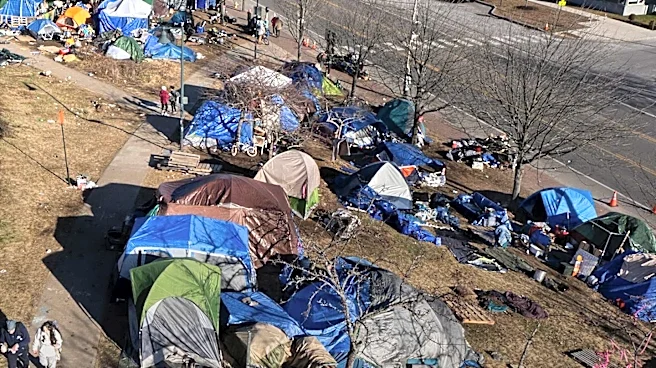
Cities across the United States are increasingly implementing bans on car camping and vehicle habitation, a trend driven by economic pressures and housing crises. These legal measures are often justified as efforts to curb homelessness but have been criticized
for exacerbating the issue. In Colorado Springs, for example, a recent expansion of the city's camping ban now includes car camping, with penalties including fines, jail time, and vehicle impoundment. This move reflects a broader pattern where municipalities are responding to the growing number of people living in vehicles due to unaffordable housing and economic instability. The bans are seen as targeting vulnerable populations, such as the estimated 770,000 unhoused Americans, rather than addressing the root causes of homelessness.
Why It's Important?
The increase in car camping bans highlights significant socio-economic challenges in the U.S., particularly the lack of affordable housing and the widening gap between wages and living costs. These bans can have severe consequences for those already struggling, potentially leading to job loss and further destabilization. The legal actions taken by cities may push the issue of homelessness into the criminal justice system, rather than providing supportive solutions. This approach could lead to increased incarceration rates among the homeless population, further straining public resources and failing to address the underlying economic and social issues.
What's Next?
As more cities adopt similar bans, there may be increased advocacy and legal challenges from civil rights organizations and homelessness advocates. These groups are likely to push for policy changes that focus on affordable housing solutions and support services rather than punitive measures. The ongoing economic pressures and housing market dynamics suggest that the issue will remain a significant policy challenge, requiring coordinated efforts at local, state, and federal levels to develop sustainable solutions.