



What's Happening?
The White Buffalo Land Trust, a conservation group in Santa Barbara, California, is spearheading efforts to transform local agricultural practices through regenerative agriculture. Led by Jesse Smith, the director of land stewardship, the group is focusing
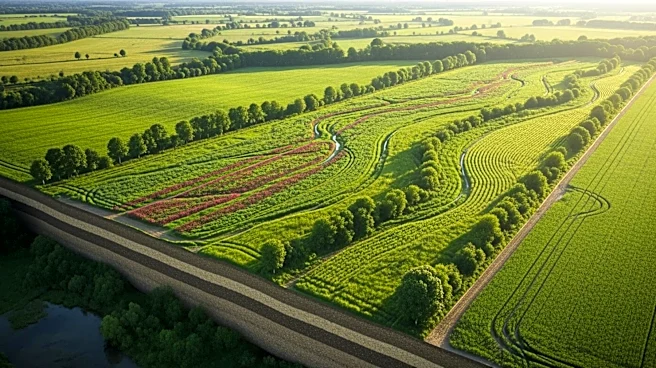
its efforts on the 1,000-acre Jalama Canyon Ranch. This initiative aims to restore the natural ecosystem by integrating sustainable practices that consider the holistic wellbeing of the environment. The ranch, located on the western edge of the Santa Ynez watershed, showcases diverse ecological features typical of Mediterranean climates. Since acquiring the ranch in 2021, White Buffalo Land Trust has been implementing strategies such as rotational cattle grazing to allow native grasses to recover, and conducting research on methane-sequestering bacteria to enhance ecological balance. The project also involves public engagement, inviting students and policymakers to witness the benefits of regenerative practices firsthand.
Why It's Important?
The initiative by White Buffalo Land Trust is significant as it addresses the ecological degradation caused by traditional agricultural practices introduced during Spanish colonization. By adopting regenerative agriculture, the project aims to create a sustainable model that can be replicated beyond Santa Barbara, potentially influencing agricultural practices on a broader scale. This approach not only seeks to restore the local ecosystem but also promotes biodiversity and reduces carbon emissions through innovative practices like rotational grazing and methane sequestration. The project has the potential to shift public perception and policy towards more sustainable agricultural methods, benefiting both the environment and the agricultural economy.
What's Next?
The ongoing project at Jalama Canyon Ranch is expected to continue developing and refining its regenerative practices. White Buffalo Land Trust plans to expand its research and public engagement efforts, potentially influencing policy changes and encouraging other agricultural regions to adopt similar sustainable practices. The group is also launching business ventures to increase demand for regenerative-sourced products, which could further drive the adoption of these practices. As the project progresses, it may serve as a case study for sustainable agriculture, attracting attention from environmentalists, policymakers, and the agricultural industry.
Beyond the Headlines
The work at Jalama Canyon Ranch highlights the broader implications of integrating conservation with agriculture. It challenges the traditional dichotomy between farming and environmental preservation, demonstrating that both can coexist and benefit each other. The project also underscores the importance of community involvement and education in driving environmental change. By engaging with diverse stakeholders, including students and policymakers, the initiative fosters a deeper understanding of the ecological and economic benefits of regenerative agriculture, potentially leading to long-term cultural and policy shifts.