








What's Happening?
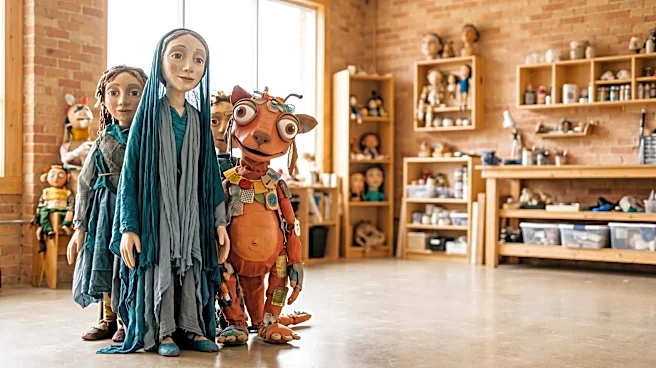
The Puppet Free Library, located in the basement of Emmanuel Church in Boston's Back Bay, provides over 300 handmade, life-sized puppets for public borrowing. These puppets, primarily crafted by Sara Peattie, co-founder of the library with her late partner
George Konnoff, are made from recycled materials such as papier-mâché, donated fabric, hospital sheet scraps, plastic byproducts, and repurposed photography paper. Peattie, who learned puppetry in the late 1960s from Peter Schumann of the Bread and Puppet Theater, established the library to foster community engagement, storytelling, and collective action. The library operates on a simple ledger system, allowing individuals to borrow puppets by providing their name and contact information. The initiative aims to empower people to create their own large-scale performances and participate in community events, including parades, protests, plays, and family gatherings. The space has a long history of puppeteering groups passing it down through generations since the 1960s, predating the formal library concept.
Why It's Important?
This initiative is important as it democratizes access to artistic expression and community organizing tools. By providing free access to large-scale puppets, the Puppet Free Library lowers the barrier for individuals and groups to engage in public discourse, artistic performances, and social activism. The use of recycled materials in puppet construction also highlights a commitment to sustainability and resourcefulness, offering a model for environmentally conscious community projects. The library's focus on workshops and activism-oriented activities, including teaching participants to make noisemakers for protests, directly supports civic engagement and the exercise of free speech. This resource can significantly impact local theaters, community groups, and students by providing unique visual elements for their projects, thereby enriching Boston's cultural landscape and fostering a more active and expressive citizenry. The intergenerational continuity of the puppeteering space underscores the enduring value of such community-driven artistic endeavors.
What's Next?
The Puppet Free Library plans to continue holding workshops and activism-oriented activities, focusing on teaching attendees how to create noisemakers for protests and encouraging the use of puppets as teaching tools to demystify complex ideas. The library will likely continue to serve as a hub for local theaters, community groups, and students, who regularly borrow the puppets for various events. Given its mission, the library may explore expanding its reach through more partnerships with local organizations and educational institutions to further promote puppetry as a medium for storytelling and collective action. The ongoing availability of these resources could lead to an increase in community-led performances and protests in Boston, potentially influencing local civic discourse and artistic expression. The library's model of resource sharing and community empowerment could also inspire similar initiatives in other cities.
Beyond the Headlines
Beyond its immediate function, the Puppet Free Library embodies a deeper philosophy of accessible art and grassroots activism. The use of giant puppets, reminiscent of their historical role in anti-war protests, connects contemporary community actions to a rich tradition of visual dissent and public spectacle. This approach challenges conventional forms of protest and artistic production by emphasizing participation and DIY culture over commercial or institutional structures. The library's reliance on recycled materials also subtly promotes an ethos of sustainability and creative reuse, suggesting that powerful artistic and political statements can be made with readily available resources. Furthermore, the act of borrowing and collectively animating these puppets fosters a sense of shared ownership and community building, transforming individual participants into collective storytellers and agents of change. This model highlights the potential for art to serve as a catalyst for social cohesion and civic empowerment.