
What's Happening?
Pakistan's agricultural sector is currently facing significant challenges due to an oversupply of potatoes and a dependency on garlic imports. The closure of the Afghanistan border has led to a surplus
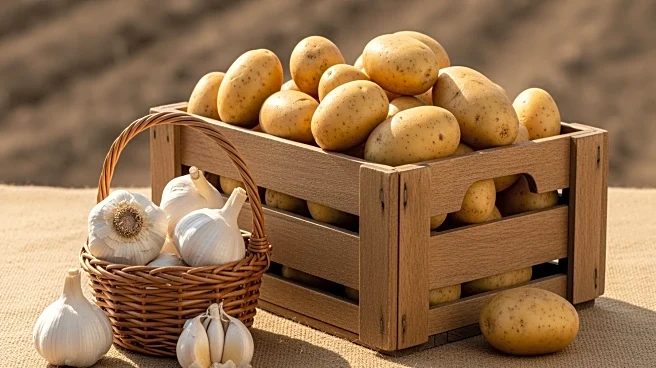
of potatoes, causing prices to plummet and forcing farmers to sell their produce at a loss. Despite a bumper crop, high production costs for fertilizers, pesticides, diesel, and electricity have exacerbated the financial strain on farmers. In contrast, Pakistan continues to import large quantities of garlic, primarily from China, to meet domestic demand, which drains foreign exchange reserves. The country has the potential to produce both crops efficiently, yet the agricultural sector remains directionless, with a lack of strategic planning and market diversification.
Why It's Important?
The situation highlights the vulnerabilities in Pakistan's agricultural sector, which heavily relies on Afghanistan as a primary export market. The recent border closure has exposed the risks of this dependency, emphasizing the need for market diversification and import substitution strategies. The financial losses faced by potato farmers and the continued import of garlic underscore the importance of developing a coherent agricultural policy. This policy should focus on improving crop quality, expanding export markets, and reducing import reliance. Addressing these issues is crucial for enhancing the sector's resilience, supporting farmers' incomes, and stabilizing the country's balance of payments.
What's Next?
To address these challenges, the government is encouraged to implement a two-pronged strategy focusing on import substitution and export market diversification. A targeted initiative to shift some potato cultivation to garlic production could help reduce import dependency and improve farmers' incomes. This transition would require government support, including interest-free loans for high-quality seeds and robust advisory services to guide farmers. Additionally, establishing small and medium enterprises for garlic value addition could enhance marketability and create opportunities for value-added exports. These steps are essential for setting a clear vision and fostering a business-enabling environment for the agricultural sector.
Beyond the Headlines
The current agricultural challenges in Pakistan also reflect broader issues of policy failure and lack of vision. The reliance on Afghanistan as a dumping ground for surplus produce has led to complacency in meeting international quality standards. This situation underscores the need for the government to play an active role in setting strategic goals, planning crop acreage, and supporting farmers and SMEs. By addressing these systemic issues, Pakistan can unlock the full potential of its agricultural sector and ensure long-term sustainability and growth.