







What's Happening?
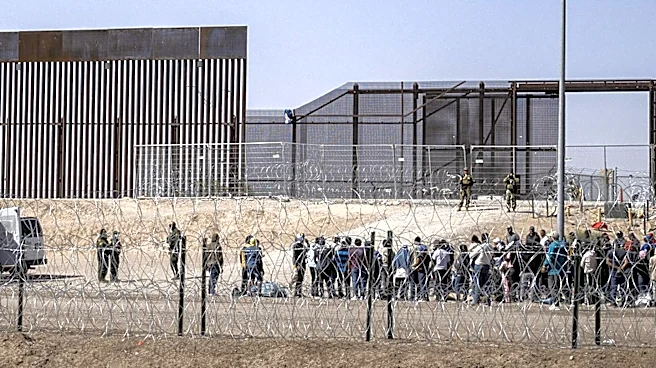
President Trump has secretly ordered a significant increase in immigration arrests, leading to the detention of more than 10,000 individuals in just five days. This move marks a shift in strategy following previous high-profile enforcement operations
that resulted in chaos and violence. The new directive aims for 2,000 detentions per day, doubling the previous daily average. The crackdown has been executed quietly, without the public announcements that characterized past operations. The detained population in ICE facilities has increased by nearly 4,000, reaching over 63,000. This surge in arrests comes as the U.S. hosts the soccer World Cup, drawing international attention.
Why It's Important?
The increase in immigration arrests under President Trump's directive has significant implications for U.S. immigration policy and its enforcement. The move is likely to satisfy the president's base, which has been critical of the perceived slowdown in deportations. However, it also raises concerns about the humanitarian impact on immigrant communities, as reports of fear and anxiety among undocumented individuals increase. The strategy reflects a renewed commitment to fulfilling campaign promises of mass deportations, despite previous legal and operational setbacks. The approach may also influence public opinion and political discourse on immigration, especially as the country remains under global scrutiny during the World Cup.
What's Next?
The continuation of this aggressive enforcement strategy may lead to further legal challenges and public protests. The Department of Homeland Security, under Secretary Markwayne Mullin, has pledged a quieter approach, but the recent surge suggests a potential escalation in operations. Political leaders and civil society groups are likely to respond, either in support or opposition, influencing future policy decisions. The administration's actions may also impact upcoming elections, as immigration remains a contentious issue. Monitoring the response from immigrant communities and advocacy groups will be crucial in assessing the long-term effects of this policy shift.