








What's Happening?
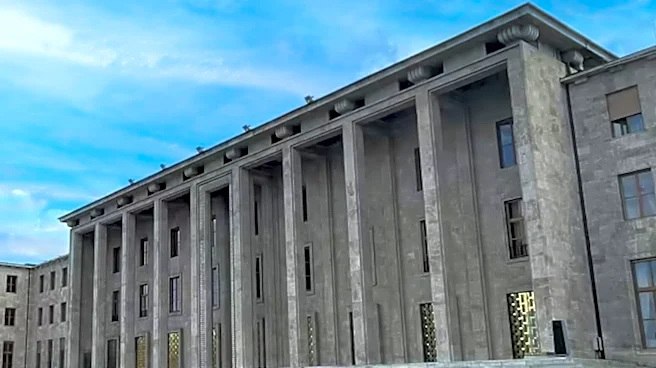
Following the failed coup attempt in July 2016, Turkey implemented emergency rule, leading to extensive purges, closures, and administrative restructuring. Crucially, the mechanisms that strengthened the presidency outlasted the emergency period. A 2017
constitutional redesign abolished the premiership, concentrating executive power and weakening parliamentary checks. Research on 147 decrees issued during the first presidential term demonstrates how reorganization became a repeatable process across policymaking, appointments, finance, and public institutions. These changes, including constitutional reform, institutional reorganization through decrees, and appointments shaping enforcement, have collectively widened presidential authority and narrowed avenues for challenge due to weaker parliamentary oversight. This has resulted in mutually reinforcing arrangements that are difficult to dismantle, making political control an everyday government function.
Why It's Important?
The consolidation of executive power in Turkey illustrates a broader mechanism where authoritarian projects become harder to reverse when executive power connects institutions, while actors resisting it remain isolated. This process, termed 'infrastructuralization,' transforms political attacks into governing infrastructure by embedding changes in law, appointments, resources, information, and national-local relations. The risk extends beyond national borders, as non-democratic states can limit the transnational reach of liberal ideas domestically while promoting illiberal norms globally through various channels. This 'authoritarian snapback' can be inadvertently reinforced by foreign engagement, which might provide concentrated executives with resources, legitimacy, and agenda-setting opportunities. The situation highlights how visible opposition alone is insufficient; institutional leverage and interconnected resistance are crucial for democratic recovery.
What's Next?
The current institutional arrangements in Turkey are costly to dismantle, suggesting a continued challenge for democratic recovery. Future efforts to support democracy will need to focus on strengthening the routes connecting scrutiny to decision-making and implementation, rather than solely on individual actors. This involves ensuring that independent reporting can reach authorities with investigative power, courts can rely on institutions capable of enforcing rulings, and local governments and watchdogs can act before budgets, appointments, or regulations are finalized. International actors and democracy support initiatives will need to scrutinize trade, migration, security, and climate partnerships to avoid unintentionally reinforcing executive gatekeepers and to preserve the capacity of legitimate institutions to cooperate. The long-term goal is to rebuild the links through which information leads to scrutiny, decisions, and enforcement, moving beyond merely visible opposition to enduring resistance.
Beyond the Headlines
The Turkish case reveals a deeper implication regarding the nature of democratic backsliding, where populist projects can evolve into entrenched authoritarian systems. The concept of 'infrastructuralization' suggests that when leaders translate populist claims into interconnected arrangements across various state functions, they create a durable form of political control. This goes beyond mere political rhetoric or temporary measures, embedding authoritarian tendencies within the very fabric of governance. The challenge lies in the fact that even if evidence of waste and irregularities exists, as shown by the Turkish Court of Accounts, media capture and weak parliamentary follow-up can restrict the route to accountability. This highlights the ethical and legal dimensions of maintaining checks and balances, and the critical role of a free press and robust parliamentary oversight in preventing the erosion of democratic norms. The long-term shift could be a global trend where democratic resilience is not just about formal safeguards but about who controls appointments, information, and delivery, and how these elements are interconnected.