






What's Happening?
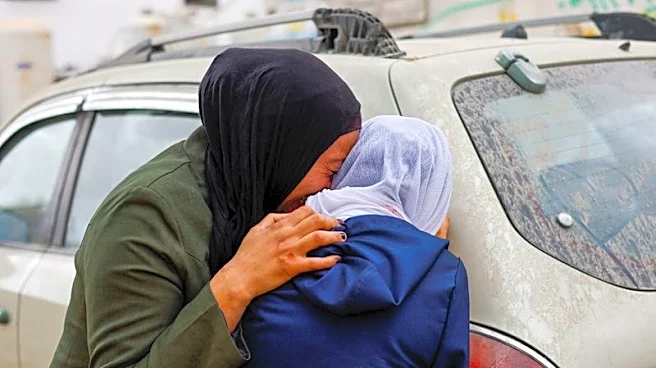
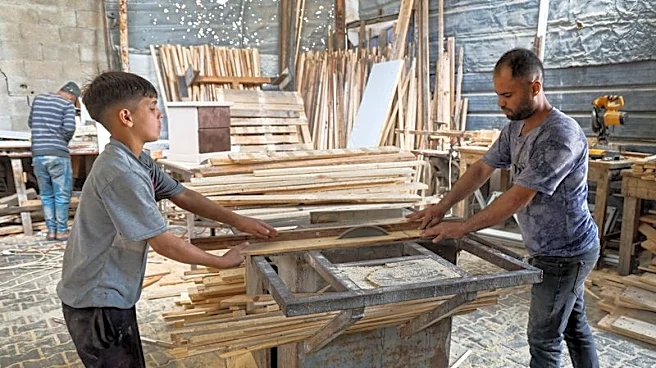
The New York Times has publicly defended its Gaza photojournalist, Saher Alghorra, who recently won a Pulitzer Prize for his coverage of the Gaza Strip during the conflict with Israel. Alghorra's work, which documents destruction, displacement, and hunger,
has been praised by the Pulitzer committee for its sensitive portrayal of the human toll of war. However, his award has sparked controversy, with some critics alleging that his images were staged and that he has ties to Hamas. The New York Times has dismissed these claims as baseless, emphasizing the authenticity and courage of Alghorra's reporting. Meaghan Looram, the Times' director of photography, highlighted the risks Alghorra faces while documenting the conflict, noting that he is living through the war himself. Despite the accolades, media watchdogs and commentators have questioned the context and credibility of some of his images, suggesting they may amplify narratives aligned with Hamas.
Why It's Important?
The defense of Saher Alghorra by the New York Times underscores the ongoing debate over media bias and the challenges of reporting from conflict zones like Gaza. The controversy highlights the difficulties journalists face in providing accurate and unbiased coverage in areas with restricted access and high risks. The allegations against Alghorra's work reflect broader concerns about the portrayal of conflicts in international media and the potential for narratives to be shaped by editorial choices. This situation also raises questions about the standards of journalistic integrity and the responsibilities of media organizations in verifying and contextualizing their reporting. The outcome of this debate could influence public perception of media credibility and the role of journalism in conflict reporting.
What's Next?
As the debate continues, the New York Times and other media organizations may face increased scrutiny over their coverage of conflict zones. The controversy could lead to calls for more transparency in how images and stories are selected and presented to the public. Media watchdogs and critics may continue to challenge the credibility of reporting from Gaza, potentially prompting further investigations into the context and accuracy of such coverage. The Pulitzer Prize committee's decision to award Alghorra may also be revisited, depending on the outcome of these discussions. Meanwhile, journalists working in conflict areas like Gaza will likely continue to navigate the complexities of reporting under dangerous and restrictive conditions.
Beyond the Headlines
The situation with Saher Alghorra's Pulitzer Prize win highlights the ethical and professional challenges faced by journalists in conflict zones. It raises important questions about the balance between capturing compelling images and ensuring their accuracy and context. The debate also touches on the broader issue of how media narratives can influence public opinion and policy decisions, particularly in politically sensitive regions. As media organizations strive to maintain credibility, they must navigate the fine line between storytelling and advocacy, ensuring that their reporting remains factual and unbiased.