







What's Happening?
Anchorage city officials are preparing for potential shifts in state leadership following upcoming elections, though they anticipate their core priorities will remain consistent despite any changes in the governor's office or the Alaska Legislature. Anchorage Mayor
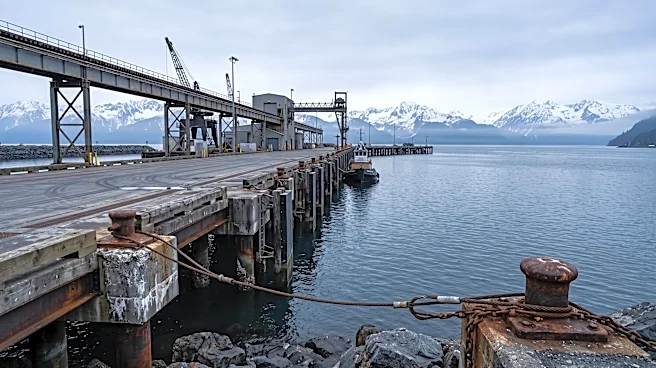
Suzanne LaFrance emphasized that the city's legislative priorities, outlined in its preliminary Legislative Program, will not disappear or morph. These priorities encompass nearly two dozen items focusing on infrastructure, public safety, energy, housing, and education. Key concerns include halting the decline of the public school system, which faces a multimillion-dollar budget deficit, and securing capital budget support for major infrastructure projects like the Port of Alaska Modernization Program. The city also seeks increased staffing and capacity for the state Department of Transportation and Public Facilities, particularly for road maintenance, and a revisit of penalties for some drug offenses to address issues of homelessness, drugs, alcohol, and mental health. The current political landscape is marked by uncertainty, with a new governor to be elected and potential changes in the composition of the Legislature.
Why It's Important?
The stability of local government services and the progress of critical infrastructure projects in Anchorage are heavily reliant on state funding and policy decisions. The anticipated leadership changes introduce an element of unpredictability, which could impact the allocation of resources and the prioritization of municipal needs. The ongoing budget deficit in the Anchorage School District, coupled with the need for significant investment in the Port of Alaska, highlights the financial strain on the city and its dependence on state support. Furthermore, the call for legislative action on drug offenses and mental health issues underscores the interconnectedness of state and local governance in addressing complex social problems. The ability of Anchorage officials to effectively advocate for their priorities, regardless of who holds state power, is crucial for the city's economic stability, public safety, and overall quality of life for its residents. The outcome of these interactions will directly affect taxpayers and the delivery of essential services.
What's Next?
Anchorage's Legislative Program will be presented to state lawmakers in the upcoming session, where city officials will advocate for their funding requests and policy changes. The election of a new governor and the formation of the next Alaska Legislature will determine the political environment in which these requests are considered. Mayor LaFrance and other city leaders will need to adapt their engagement strategies based on the new state leadership, seeking common ground on shared goals. Key areas of focus will include securing capital budget support for infrastructure, advocating for increased education funding, and pushing for reforms in public safety and mental health policies. The city will also continue to seek increased 'revenue sharing' from the state to support municipal services. The success of these efforts will depend on the willingness of the new state administration and Legislature to collaborate with local governments on these critical issues.
Beyond the Headlines
The situation in Anchorage reflects a broader challenge faced by many U.S. cities: navigating fiscal constraints and evolving state political landscapes to meet local needs. The long-standing shrinkage in state capacity and support for local governments, as noted by the Alaska Municipal League, has forced cities to become more strategic and flexible in their requests. The emphasis on infrastructure, education, and public safety highlights fundamental responsibilities of government that often become battlegrounds during budget cycles. The political dynamics, including the history of clashes between Anchorage city officials and previous state administrations, underscore the importance of intergovernmental relations. This scenario also brings to light the impact of macroeconomic factors, such as energy prices, on state budgets and, consequently, on the resources available to local communities. The ability of Anchorage to secure necessary funding and policy support will serve as a case study for how local governments adapt to and influence state-level political transitions.