






What's Happening?
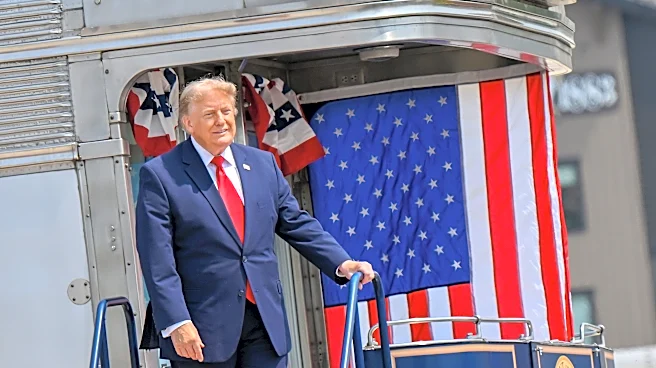
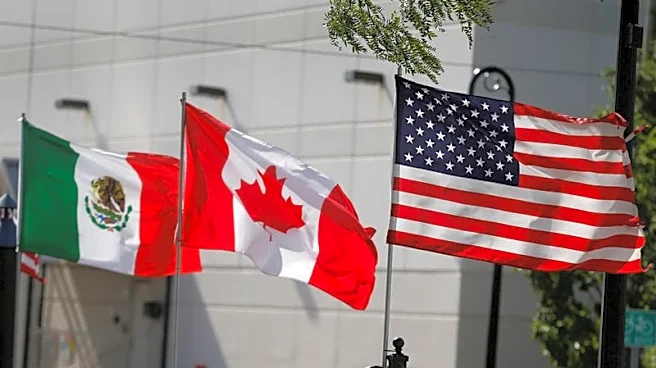
President Trump has expressed intentions to abandon the United States-Mexico-Canada Agreement (USMCA), a trade deal he once praised as the 'fairest, most balanced, and beneficial trade agreement.' The USMCA, which replaced the North American Free Trade
Agreement (NAFTA), facilitates approximately $2 trillion in annual trade among the U.S., Mexico, and Canada. Despite the agreement's significance, Trump has stated that the U.S. does not need goods from Canada or Mexico, although both countries rely heavily on U.S. exports. The Trump administration recently failed to reach a new agreement with trade leaders from Mexico and Canada, leading to a continuation of the current terms. The agreement requires a review every six years, and while it remains intact, the countries will reconvene annually for the next decade to negotiate potential changes.
Why It's Important?
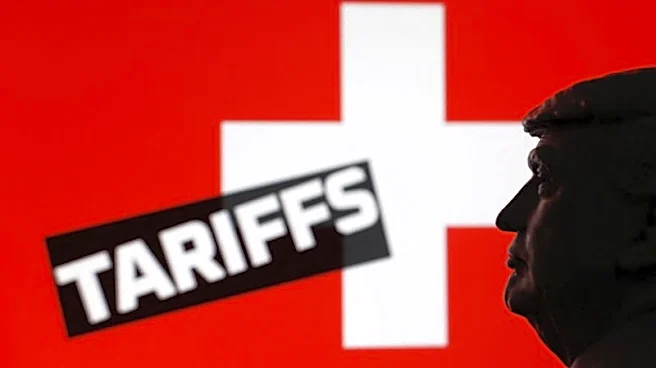
The potential withdrawal from the USMCA could have significant implications for the U.S. economy and its trade relations with Canada and Mexico, two of its largest trading partners. The agreement is crucial for industries like automotive manufacturing, which depend on duty-free provisions to maintain efficient supply chains. A withdrawal could lead to increased tariffs, resulting in higher prices and potential shortages as businesses adjust. Economists and trade experts warn that such a move could strain U.S. relations with its neighbors and cause market instability. The decision also comes at a politically sensitive time, with midterm elections approaching and President Trump's favorability under pressure due to rising gas prices.
What's Next?
While the USMCA remains in place for now, the Trump administration has signaled a willingness to pursue bilateral trade talks to address specific issues, such as the trade deficit with Mexico and Canada. Any attempt to withdraw from the agreement would likely face legal challenges, as congressional approval is generally required to exit a congressionally approved trade deal. The earliest a withdrawal could occur is six months from now, according to the agreement's terms. The administration's next steps will be closely watched by businesses and political leaders, as the outcome could impact U.S. investment and trade, particularly in key swing states.