






What's Happening?
The United States currently accounts for approximately 12% of global rare earth mining, but its worldwide refining capacity stands at a mere 1%, according to Moody's Ratings. This stark contrast highlights a critical dependency on foreign nations, particularly
China, which dominates the rare earth supply chain with 91% of global refining activity and over 70% of the world's supply of rare earth metals. The U.S. has recognized its over-reliance on China for these essential materials, which are vital components in a wide array of high-tech products, including defense weaponry, automobiles, and consumer electronics. Efforts are underway, supported by federal backing and private investment, to develop domestic rare-earth production capabilities. A key focus of these efforts is the Mountain Pass mine in San Bernardino County, California, operated by MP Materials, which holds the world's largest deposit of carbonatite, a significant source of several rare earth elements, niobium, and phosphate.
Why It's Important?
The U.S.'s limited rare earth refining capacity poses a significant national security and economic vulnerability. Rare earth elements are indispensable for modern technologies, including advanced military systems, renewable energy infrastructure, and consumer electronics. The heavy reliance on China for refining creates a single point of failure in the supply chain, potentially exposing the U.S. to geopolitical leverage and supply disruptions. Regaining dominance in rare earth production, particularly in refining, is crucial for ensuring a stable and secure supply of these critical minerals. This would reduce strategic vulnerabilities, foster domestic technological innovation, and support the growth of industries reliant on rare earth materials. The current situation means that even with domestic mining capabilities, the U.S. must send its raw materials abroad for processing, diminishing its control over the final product and its value chain.
What's Next?
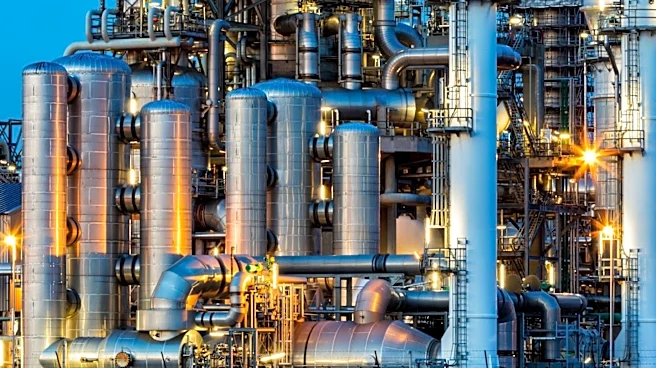
The ongoing federal backing and private investment in domestic rare-earth production capabilities, particularly at sites like the Mountain Pass mine, are expected to continue. The focus will likely remain on expanding refining capacity within the U.S. to reduce reliance on foreign processing. This could involve further investment in advanced refining technologies and infrastructure. Additionally, there may be increased exploration for new rare earth deposits within the U.S. and efforts to streamline regulatory processes for mining and refining operations. The long-term goal is to establish a more resilient and self-sufficient domestic supply chain for rare earth elements, which will require sustained commitment from both government and private sectors to overcome the current refining deficit and compete with established global players.
Beyond the Headlines
The challenge of rare earth dominance extends beyond mere economic competition; it touches upon broader themes of national sovereignty, technological leadership, and environmental stewardship. Developing a robust domestic rare earth supply chain requires not only significant capital investment but also addressing complex environmental concerns associated with mining and refining these materials. The ethical sourcing of rare earths and the development of sustainable processing methods will be critical for long-term success and public acceptance. Furthermore, this push for domestic production could stimulate innovation in materials science, leading to the discovery of alternative materials or more efficient extraction techniques. The strategic importance of rare earths also highlights the ongoing global competition for critical resources, underscoring the need for comprehensive national strategies that integrate economic, environmental, and security objectives.