






What's Happening?
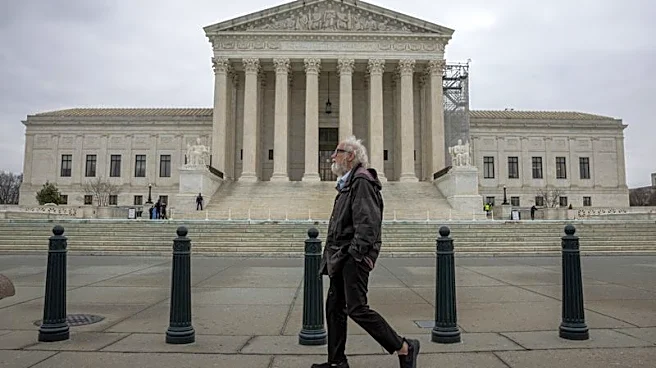
The U.S. Supreme Court is set to rule on whether members of the Falun Gong religious group can proceed with a lawsuit against Cisco Systems. The plaintiffs, including William Wang, allege that Cisco provided technology that enabled the Chinese government
to persecute Falun Gong practitioners. Wang, who was imprisoned and tortured in China for nearly a decade, claims that Cisco's technology was integral to the surveillance system used against him and others. The case hinges on the Alien Tort Statute, a centuries-old law that allows noncitizens to sue in U.S. courts for international law violations. The Supreme Court's decision will determine if the statute can be applied to hold U.S. companies accountable for alleged complicity in human rights abuses abroad.
Why It's Important?
The outcome of this case could significantly impact the ability of human rights advocates to use U.S. courts to hold corporations accountable for their actions overseas. A ruling in favor of Cisco could limit the scope of the Alien Tort Statute, potentially closing U.S. courts to similar human rights claims. This decision could affect how American companies conduct business internationally, particularly in countries with questionable human rights records. It also raises questions about corporate responsibility and the extent to which companies should be held liable for the use of their products in human rights violations.
What's Next?
The Supreme Court's ruling, expected later this year, will clarify the legal boundaries of the Alien Tort Statute. If the court sides with Cisco, it could effectively end the use of the statute for human rights cases against corporations. Conversely, a decision allowing the lawsuit to proceed could open the door for more claims against companies accused of aiding foreign governments in human rights abuses. The decision will likely influence future legislative actions and corporate policies regarding international operations and human rights considerations.
Beyond the Headlines
This case highlights the ethical and legal challenges faced by multinational corporations operating in countries with poor human rights records. It underscores the tension between business interests and human rights advocacy, as well as the role of technology in enabling government surveillance and repression. The case also reflects broader geopolitical dynamics, as U.S. courts grapple with the implications of holding domestic companies accountable for actions linked to foreign governments.