






What's Happening?
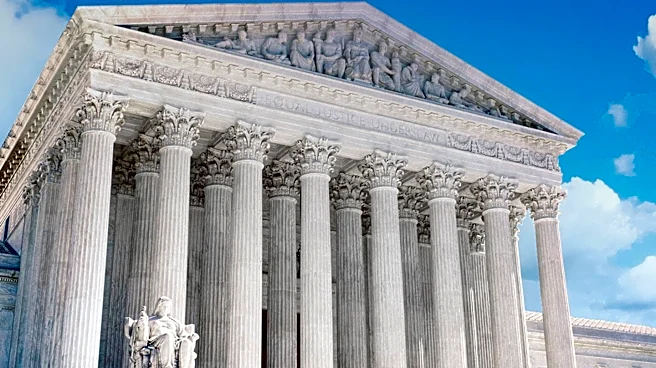
Following a Supreme Court decision, the U.S. Customs and Border Protection (CBP) agency is issuing refunds for International Emergency Economic Powers Act (IEEPA) tariffs imposed during President Trump's administration. Over $100 billion in these tariffs has
already been refunded to businesses, representing about 60% of the total owed to importers. While CBP directly refunds the 'importer of record,' these businesses are not legally obligated to pass the money on to consumers. However, some major shipping carriers, including UPS, FedEx, and DHL, have committed to issuing refunds to customers who originally paid these duties, establishing refund portals or automatic processes. Amazon has also indicated it will proactively contact affected customers and issue automatic refunds in cases where specific import charges can be traced. Despite these efforts, experts suggest consumers are likely to recoup only a small fraction of the estimated $1,000 in additional import duties households paid.
Why It's Important?
The tariff refunds have significant implications for both businesses and consumers. For businesses, particularly importers and large retailers, the refunds represent a substantial financial windfall, potentially impacting their balance sheets and pricing strategies. For consumers, while the direct impact may be limited, the refunds offer a partial reversal of increased costs on imported goods. The situation highlights the complex relationship between trade policy, corporate responsibility, and consumer welfare. The fact that businesses are not legally required to pass on refunds raises questions about fairness and transparency in pricing, especially since many retailers absorbed tariff costs by spreading price hikes across various products. This scenario underscores how federal trade policies can have ripple effects throughout the economy, affecting everything from corporate profits to household budgets.
What's Next?
Consumers who believe they are eligible for a refund, particularly for online purchases shipped via UPS, FedEx, or DHL, should visit the respective carriers' websites for information on their refund processes. Some carriers have established dedicated portals to track refund statuses. Class-action lawsuits against major retailers like Amazon, Costco, Nike, and Walmart are in their early stages, seeking to compel these companies to return tariff-related windfalls to customers, though their legal standing is uncertain. Additionally, Senator Elizabeth Warren is investigating seven major U.S. retailers, seeking information on the size of their tariff refunds and pressing them to return the money to consumers. The outcome of these investigations and lawsuits could further shape how businesses handle such refunds in the future and potentially lead to new consumer protection measures.
Beyond the Headlines
This development sheds light on the broader economic impact of tariffs and the challenges of unwinding their effects. Tariffs, while intended to protect domestic industries or exert geopolitical pressure, often result in increased costs for consumers, even if indirectly. The current refund process reveals the difficulty in tracing and compensating individual consumers for these costs, as many retailers integrated tariff expenses into their overall pricing structures rather than itemizing them. This situation also underscores the power dynamics between large corporations and individual consumers, and the role of legislative and judicial bodies in mediating these relationships. The ongoing debate and actions by lawmakers like Senator Warren reflect a societal expectation that financial benefits derived from government policy changes should, where possible, be passed on to those who bore the initial cost.