



What's Happening?
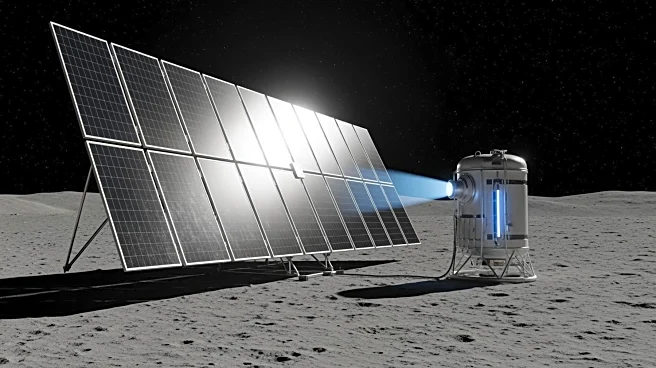
NASA is advancing its Carbothermal Reduction Demonstration (CaRD) project, which aims to produce oxygen from simulated lunar regolith using solar technology. The project involves a solar concentrator, mirrors, and software to confirm the production of carbon
monoxide, a precursor to oxygen. This technology, if deployed on the Moon, could enable the production of propellant using lunar materials and sunlight, reducing the cost and complexity of sustaining human presence on the lunar surface. The CaRD project is funded by NASA's Game Changing Development Program, which supports technologies for future space missions and addresses significant national needs.
Why It's Important?
The development of technology to extract oxygen on the Moon is crucial for future lunar missions and long-term human habitation. By utilizing lunar materials and solar energy, NASA can significantly reduce the logistical challenges and costs associated with transporting resources from Earth. This advancement not only supports sustainable lunar exploration but also has potential applications for Mars missions, where similar technology could convert carbon dioxide into oxygen and methane. The success of the CaRD project could pave the way for more efficient and cost-effective space exploration, enhancing the United States' leadership in space technology.
What's Next?
NASA plans to continue testing and refining the CaRD technology, with potential deployment on the Moon's south pole. The agency will focus on integrating the technology into future lunar missions, aiming to establish a sustainable human presence. Further developments may include adapting the technology for Mars exploration, where it could play a critical role in supporting human missions. NASA's ongoing commitment to innovation in space technology will likely lead to new partnerships and collaborations with commercial entities and international space agencies.
Beyond the Headlines
The implications of NASA's CaRD project extend beyond immediate space exploration goals. The ability to produce oxygen and propellant on the Moon could lead to new economic opportunities, such as lunar mining and commercial space ventures. Additionally, the technology could inspire advancements in renewable energy and resource utilization on Earth, contributing to environmental sustainability. As NASA continues to push the boundaries of space technology, ethical considerations regarding the use of extraterrestrial resources and international cooperation will become increasingly important.