








What's Happening?
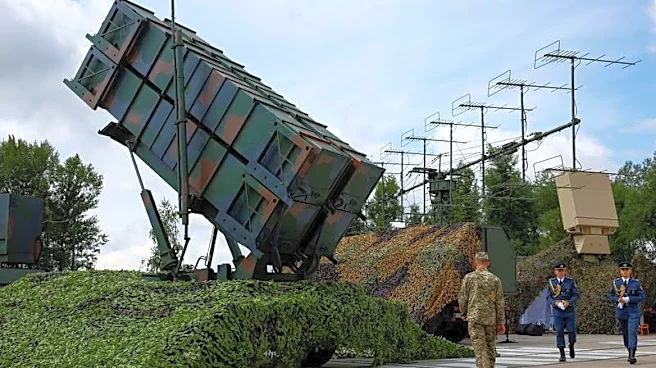
The U.S. military is facing a significant challenge in replenishing its stockpile of Patriot and Terminal High Altitude Area Defense (THAAD) missiles, which have been heavily utilized in the ongoing conflict with Iran. Since the war began in February,
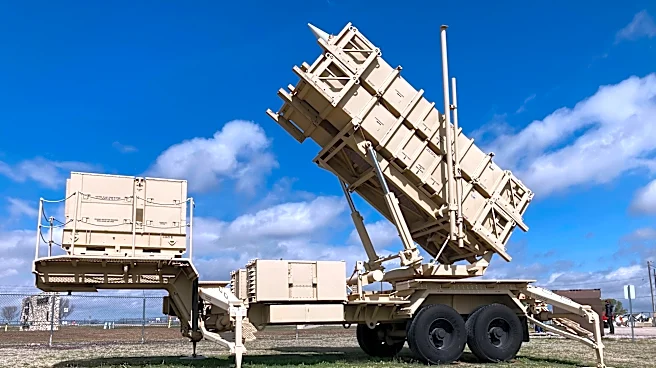
the U.S. has expended a substantial portion of its missile inventory to counter Iranian drone and missile attacks on U.S. bases and allied countries in the Middle East. According to the Center for Strategic and International Studies (CSIS), the U.S. may have used up to 67% of its Patriot missiles and 48% of its THAAD interceptors. The current stockpile of Patriot missiles has decreased from 2,330 to between 759 and 827, while THAAD missiles have dropped from 452 to between 234 and 278. The replenishment process is expected to take about three years, contingent on congressional approval of the Pentagon's budget and the ability of defense contractors to ramp up production.
Why It's Important?
The depletion of missile defense stockpiles poses a strategic risk for the U.S. military, particularly in maintaining its defense capabilities in the Middle East and potentially in the Western Pacific against China. The reliance on Patriot and THAAD systems underscores the lack of viable alternatives for ballistic missile defense, which could force the U.S. and its allies to take greater risks in future interceptions. The situation also highlights the broader implications for U.S. military readiness and the ability to support allies such as Ukraine. The Pentagon's efforts to secure contracts with defense companies like Lockheed Martin aim to increase production capacity, but the complexity of these systems means that replenishment will not be immediate.
What's Next?
The U.S. military's ability to replenish its missile stockpiles will depend on several factors, including congressional approval of defense budgets and the capacity of defense contractors to meet production demands. Lockheed Martin has been awarded significant contracts to increase the production of Patriot and THAAD missiles, with plans to triple and quadruple production capacity, respectively, by the end of the decade. However, the timeline for these efforts to take effect ranges from three to seven years. In the interim, the U.S. must balance its current inventory to support ongoing operations while preparing for potential future conflicts.