








What's Happening?
Representative Rick Crawford, a Republican from Arkansas and Chair of the House Intelligence Committee, is advocating for increased vigilance against emerging threats such as drone attacks and artificial intelligence. Speaking to 'Just the News,' Crawford emphasized
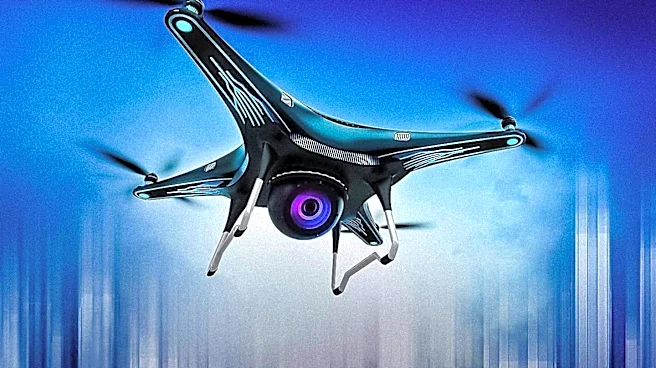
that the nation cannot afford a 'lack of imagination' in addressing these new challenges. He plans to present a roadmap for protecting the U.S. from future threats during an upcoming field hearing in Shanksville, Pennsylvania, marking the 25th anniversary of 9/11. Crawford expressed concern that the country has not done enough to prevent future attacks potentially driven by AI, drone swarms, biological weapons, or cyberattacks. He highlighted that adversaries do not organize based on U.S. bureaucracies but rather exploit vulnerabilities, making it crucial for the U.S. to identify these weaknesses first. The committee's work, typically conducted behind closed doors, is being brought to a public forum to encourage serious reflection on preventing future terrorist acts.
Why It's Important?
This initiative by Representative Crawford underscores a critical shift in national security priorities, moving beyond traditional threats to encompass advanced technological dangers. The focus on AI and drone swarms reflects a recognition that future attacks may not resemble past events like 9/11, potentially involving economic disruption through commercial airspace interference or cyberattacks on critical infrastructure. This re-evaluation of threats is vital for U.S. national security, as it aims to preemptively address vulnerabilities that could be exploited by state-sponsored terrorism or asymmetric groups like ISIS or Al Qaeda. The emphasis on a 'lack of imagination' from the 9/11 Commission Report serves as a stark reminder of the need for proactive and adaptive defense strategies. Failure to anticipate and counter these evolving threats could have severe consequences for U.S. economic stability, public safety, and national defense capabilities, impacting industries from aviation to technology and potentially leading to widespread societal disruption.
What's Next?
Representative Crawford is scheduled to present a detailed roadmap on how to protect the United States from future threats during a field hearing in Shanksville, Pennsylvania. This hearing, coinciding with the 25th anniversary of 9/11, aims to engage the public and policymakers in a serious discussion about evolving security challenges. The roadmap is expected to outline specific strategies and policy recommendations to counter threats posed by artificial intelligence, drone technology, biological weapons, and cyberattacks. Following the hearing, there will likely be increased legislative focus on these areas, potentially leading to new funding allocations for research and development in defensive technologies, enhanced intelligence gathering capabilities, and updated national security protocols. Stakeholders, including defense contractors, technology companies, and intelligence agencies, will be closely watching these developments for potential shifts in government contracts and strategic partnerships. The discussions may also influence international collaborations on counter-terrorism and cybersecurity measures.
Beyond the Headlines
The initiative led by Representative Crawford highlights a profound ethical and strategic challenge: how to balance technological advancement with national security. The rapid evolution of AI and drone technology presents a dual-use dilemma, where innovations designed for beneficial purposes can be weaponized by adversaries. This necessitates a re-evaluation of existing legal frameworks and international norms governing autonomous weapons and cyber warfare. Furthermore, the call for preventing a 'lack of imagination' suggests a cultural shift within intelligence communities, moving towards more speculative and forward-thinking threat assessments. This could lead to greater investment in foresight programs and interdisciplinary research combining technology, social science, and security studies. The potential for economic terrorism using drones to disrupt commercial air travel, as mentioned by Crawford, also raises questions about the resilience of critical infrastructure and the need for robust public-private partnerships to safeguard essential services against novel forms of attack.