







What's Happening?
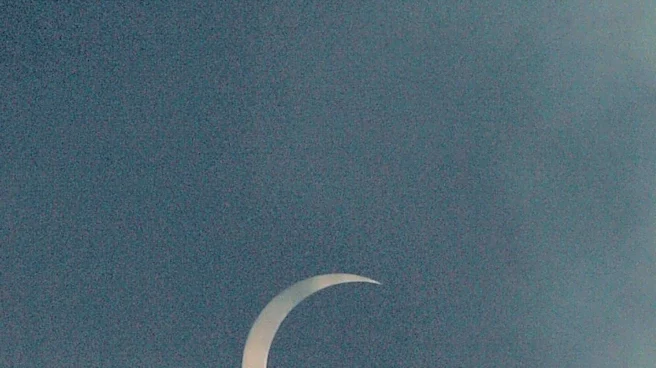
On August 12, 2026, a partial solar eclipse will be visible in parts of the United States, while mainland Europe will experience a total eclipse. The eclipse will occur as the moon's shadow moves across Greenland, Iceland, northern Russia, northern Spain,
and a portion of Portugal. In the U.S., 26 states and Washington, D.C. will witness a partial eclipse, with the best views in the northern regions. NASA plans to provide a live broadcast of the event, featuring telescope views and commentary from scientists. The eclipse will begin at 7:34 a.m. Alaska Standard Time and conclude at 2:52 p.m. Eastern Time.
Why It's Important?
The partial solar eclipse offers a unique opportunity for educational engagement and public interest in astronomy. It highlights the importance of scientific observation and the role of organizations like NASA in making such events accessible to a wider audience. The event also underscores the need for proper eye protection when viewing solar phenomena, as emphasized by safety guidelines for eclipse glasses. This eclipse serves as a reminder of the interconnectedness of global astronomical events and their impact on different regions.
What's Next?
As the date approaches, NASA and other organizations will likely increase public outreach and educational efforts to ensure safe viewing practices. The event may also prompt discussions on the importance of space exploration and scientific research. Additionally, the eclipse could inspire future initiatives to engage the public in astronomical events, fostering a greater appreciation for science and technology.