








What's Happening?
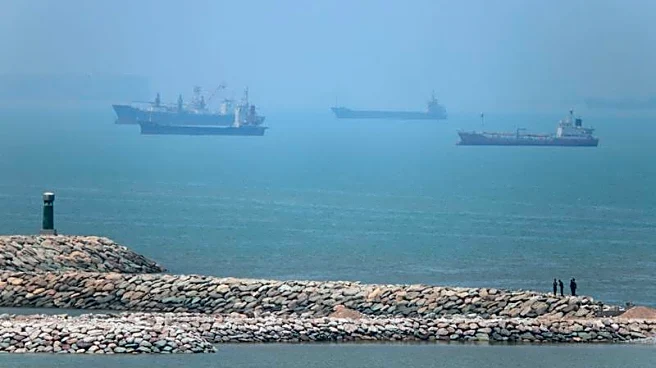
The U.S. State Department has issued a travel warning for Americans in the Middle East, citing volatile security conditions. This advisory comes as the U.S. and Iran move towards a tentative agreement that could reopen the Strait of Hormuz and allow some
Iranian oil sales to resume. Despite these diplomatic efforts, the security environment remains complex, with potential disruptions to travel due to airspace closures, demonstrations, and threats to U.S.-associated locations. The State Department's Level 4 'Do Not Travel' warning remains in place for several countries, including Iran, Iraq, and Syria, while Level 3 advisories are issued for others like Israel and Saudi Arabia.
Why It's Important?
The travel warning highlights the ongoing instability in the Middle East, which poses risks to American travelers and affects global travel and tourism. The tentative agreement with Iran could ease some tensions and economic disruptions, particularly in the energy sector, if successful. However, the uncertainty surrounding the agreement and unresolved issues like nuclear limits and sanctions relief continue to pose challenges. The warning underscores the need for travelers to remain vigilant and informed about the rapidly changing security landscape in the region.
What's Next?
The potential agreement with Iran could lead to temporary improvements in regional stability, but its success depends on resolving key issues and maintaining a pause in hostilities. U.S. officials continue to urge caution, advising travelers to enroll in the Smart Traveler Enrollment Program for updates and to avoid demonstrations and large gatherings. The situation remains fluid, and travelers should be prepared for sudden changes in security conditions.
Beyond the Headlines
The travel warning reflects broader geopolitical dynamics in the Middle East, where U.S. interests and regional conflicts intersect. The tentative agreement with Iran could influence diplomatic relations and impact global energy markets. Additionally, the advisory highlights the importance of cultural and historical sites in the region, which are affected by security concerns. The long-term implications of these developments on U.S. foreign policy and regional stability remain uncertain.