









What's Happening?
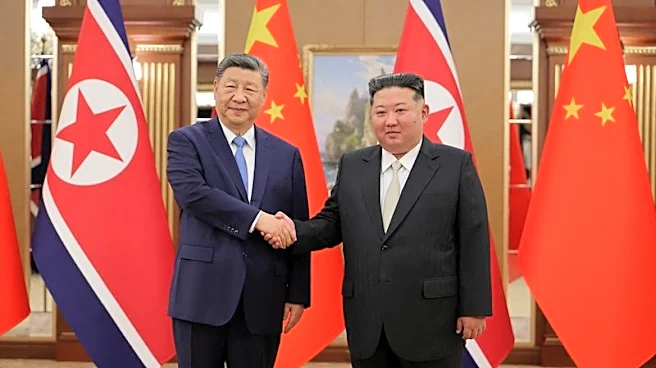
Chinese President Xi Jinping's recent visit to North Korea, his first in seven years, was marked by a notable silence on the issue of North Korea's nuclear weapons program. Despite extensive coverage by state-run media in both countries, there was no mention
of the nuclear issue, which has been a point of contention for the United States and its allies. This silence suggests a shift in China's approach, as it has historically been a partner in diplomatic efforts to denuclearize the Korean Peninsula. Xi's visit, which focused on strengthening bilateral ties, may indicate a new phase in China-North Korea relations, where stability and strategic cooperation take precedence over denuclearization.
Why It's Important?
The absence of nuclear discussions during Xi's visit could have significant implications for regional security and international diplomacy. For North Korea, this silence is a diplomatic win, as it seeks international recognition as a nuclear state. For the U.S. and its allies, it complicates efforts to curb North Korea's nuclear ambitions. China's apparent acceptance of North Korea's nuclear status could embolden Pyongyang and alter the balance of power in East Asia. This development may require the U.S. and its allies to reassess their strategies and alliances in the region, as they navigate the complexities of this evolving geopolitical landscape.
What's Next?
The visit sets the stage for increased strategic communication and cooperation between China and North Korea. However, the lack of discussion on nuclear issues raises questions about future negotiations on denuclearization. The U.S. and its allies may need to reassess their strategies in dealing with North Korea, considering China's apparent acceptance of North Korea's nuclear status. This could lead to a recalibration of diplomatic efforts and alliances in the region, as stakeholders navigate the complexities of this evolving geopolitical landscape.