


What's Happening?
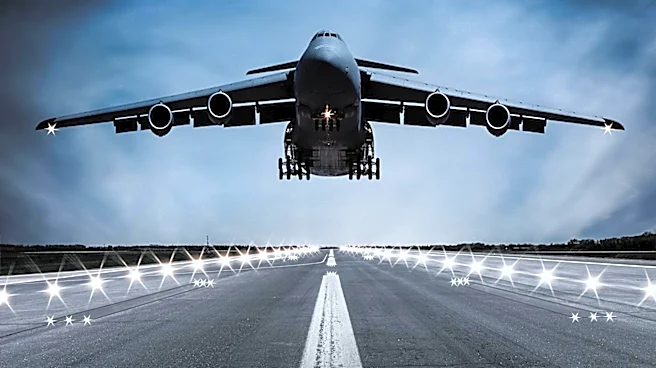
The U.S. Air Force has successfully returned a C-17 Globemaster III to service after creating a replacement nose panel using robotic technology. The aircraft, part of the 445th Airlift Wing at Wright-Patterson Air Force Base, Ohio, was damaged in a storm
in March 2025. With no vendor willing to produce the necessary tooling for a single panel, the Air Force's Rapid Sustainment Office employed incremental sheet forming (ISF) technology to fabricate the part. This method uses a robot to shape metal without the need for traditional tooling. The panel was installed in July 2026, allowing the aircraft to resume operations.
Why It's Important?
This development demonstrates the Air Force's ability to innovate and overcome supply chain limitations, ensuring mission readiness. The use of ISF technology represents a significant advancement in military logistics, potentially reducing downtime for essential aircraft. As the Air Force plans to operate the C-17 fleet into the 2070s, such innovations are crucial for maintaining operational capabilities. This approach could set a precedent for future maintenance and repair strategies, highlighting the importance of technological adaptation in military operations.