
What's Happening?
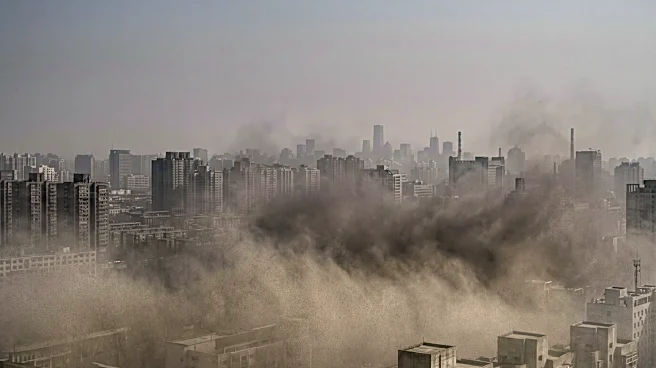
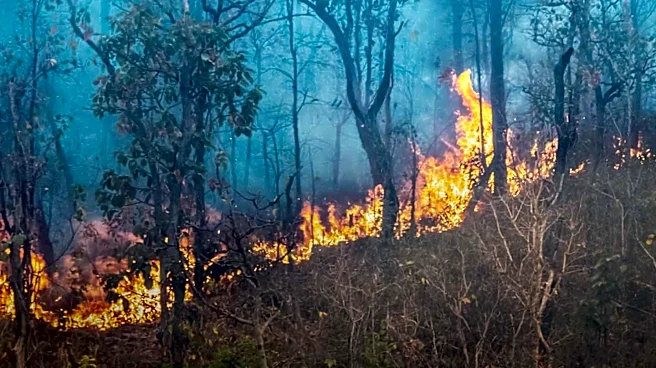
A global analysis has found that approximately 916 million people worldwide are exposed to overlapping heatwaves and wildfire smoke each year. This figure increased by 287 million per decade between 2000
and 2019. The study, led by Yao Wu of Monash University’s School of Public Health and Preventive Medicine, in collaboration with researchers from Peking University and the University of Tasmania, indicates that the rise is primarily driven by an increase in heatwave days, which grew in 87% of the studied areas. Smoke days, however, increased in only 28% of areas, predominantly in North America. The research defined a smoke day as any day where fine particles or ozone exceeded the World Health Organization’s daily guideline, with at least half of the pollution originating from landscape fires. A heatwave was defined as at least two consecutive days with temperatures above the local 90th percentile. The study also identified a clear timing pattern, with smoke episodes typically beginning to climb about two days before a heatwave and peaking on its first day.
Why It's Important?
This research highlights a growing public health crisis with significant implications for global populations, particularly in low-income countries. The increase in combined exposure to heatwaves and wildfire smoke poses heightened health risks, as earlier work suggests that these two hazards together may cause more harm than individually. The disproportionate burden on low-income countries, such as Zambia, the Democratic Republic of the Congo, and Malawi, which experience the most overlap days per person, underscores existing health inequities and the need for targeted interventions. The findings challenge the assumption that economic development automatically reduces exposure to environmental hazards, as seen in Cambodia's sharp increase in exposure despite economic growth. This situation demands integrated public health strategies that address both heat and air quality, which can sometimes conflict, such as opening windows for cooling while allowing smoke indoors. The study's focus on exposure rather than illness also points to a critical gap in understanding the full health impact.
What's Next?
The next phase of research will focus on using these exposure maps to study the health impacts of combined heat and smoke, especially in regions that have received limited research attention. This will be crucial for developing more effective public health interventions and warning systems that address both hazards simultaneously. Public health officials and policymakers are advised to implement integrated strategies, such as promoting access to cool, clean air environments, and issuing comprehensive warnings that account for both heat and air quality. Individuals are encouraged to check local heat and air quality warnings, limit outdoor activity, and stay in cool, clean-air environments. The study also suggests that protective measures for heat and smoke can sometimes conflict, necessitating careful guidance for the public. The data collected up to 2019 raises concerns that combined exposure may have continued to increase, particularly in low-income countries, indicating an urgent need for updated assessments.
Beyond the Headlines
The study's findings reveal a deeper ethical and societal challenge related to climate change and environmental justice. The fact that low-income countries bear the heaviest burden of combined heatwave and wildfire smoke exposure highlights a significant disparity in climate change impacts. These nations often contribute least to global emissions but suffer the most severe consequences, raising questions about international responsibility and aid. The conflict between protective measures, such as opening windows for cooling versus keeping them closed to block smoke, illustrates the complex trade-offs individuals face in adapting to a changing climate, particularly those without access to air conditioning or air filtration. This situation could exacerbate existing social inequalities, as vulnerable populations, including older adults, children, and those with pre-existing health conditions, are disproportionately affected. The research also implicitly calls for a re-evaluation of global climate adaptation strategies to ensure they are equitable and address the multifaceted nature of climate-related hazards.