







What's Happening?
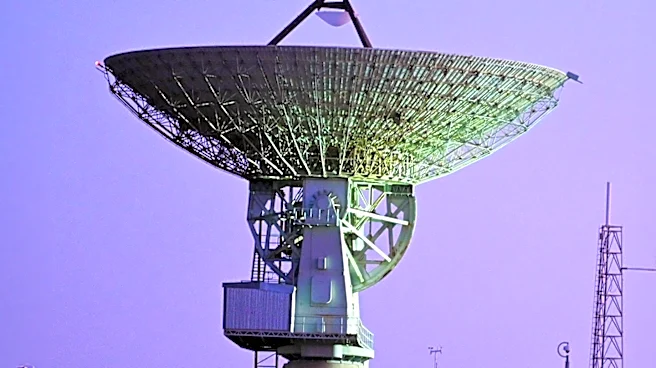
Collins Aerospace, a subsidiary of RTX Corporation, is significantly expanding its role in the aerospace and defense industry by developing advanced communication systems. The company has secured a contract to deliver satellite communication systems by 2025,
designed to support survivable communications across multiple frequency bands. This initiative aims to ensure continuous connectivity for defense customers even in challenging operational environments. Additionally, Collins Aerospace has been designated as the primary subcontractor for a U.S. Navy solution. This role involves the engineering design and manufacturing of a Very Low Frequency (VLF) communication subsystem, alongside the necessary mission command, control, and communications infrastructure. The company is also actively supporting Advanced Extremely High Frequency (AEHF) and voice communications, thereby broadening its involvement in various military communication requirements. These developments underscore Collins Aerospace's commitment to providing technologically advanced and intelligent solutions for the defense sector, addressing the critical need for resilient connectivity.
Why It's Important?
The expansion of Collins Aerospace's defense communications capabilities is crucial for enhancing U.S. national security and military operational effectiveness. By developing systems that ensure survivable communications across multiple frequency bands, the company is directly addressing the growing need for resilient connectivity in contested and challenging environments. This is vital for maintaining command and control, intelligence sharing, and overall mission success for the U.S. Navy and other defense customers. The contracts position Collins Aerospace as a key player in the defense communications market, potentially leading to further growth opportunities for RTX Corporation. The integration of satellite communications, specialized military communication subsystems, and command-and-control infrastructure provides comprehensive solutions that are essential for modern warfare. This strategic focus helps ensure that U.S. military forces can operate effectively and securely, regardless of the operational landscape, thereby safeguarding national interests and personnel.
What's Next?
Collins Aerospace is expected to continue its development and delivery of the contracted satellite communication systems, with a target completion by 2025. The company will also proceed with its role as the primary subcontractor for the U.S. Navy's VLF communication subsystem and associated infrastructure. Further integration and testing of these advanced communication systems will be critical to ensure their effectiveness in real-world operational scenarios. As the demand for resilient military connectivity grows, Collins Aerospace is likely to pursue additional contracts and partnerships to further expand its portfolio. This could involve exploring new technologies and solutions to address evolving threats and operational requirements. The company's ongoing efforts will focus on strengthening its position in the advanced defense communications market, potentially leading to more integrated systems that support secure and resilient operations across diverse environments for defense customers.
Beyond the Headlines
The advancements by Collins Aerospace in defense communications highlight a broader strategic shift towards enhancing resilience and survivability in military operations. In an era where electronic warfare and cyber threats are increasingly sophisticated, the ability to maintain secure and uninterrupted communication is paramount. This goes beyond mere technological upgrades; it represents a fundamental re-evaluation of how military forces operate and communicate in contested domains. The development of multi-frequency band systems and robust command-and-control infrastructure reflects a proactive approach to counter potential adversaries' attempts to disrupt communication networks. This also has implications for international alliances, as interoperable and resilient communication systems are essential for joint operations. The long-term impact could include a more interconnected and secure global defense posture, but also raises questions about the arms race in communication technologies and the ethical considerations of advanced surveillance and control capabilities in future conflicts.