

What's Happening?
The White House social media apparatus has recently utilized a grainy, 'analog horror'-style image of President Trump on the White House roof, accompanied by the repeated phrase 'DEPORT. DEPORT. DEPORT. DEPORT.' This image, which first circulated online
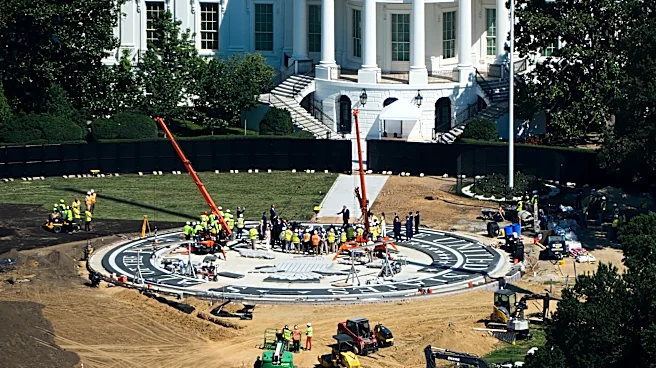
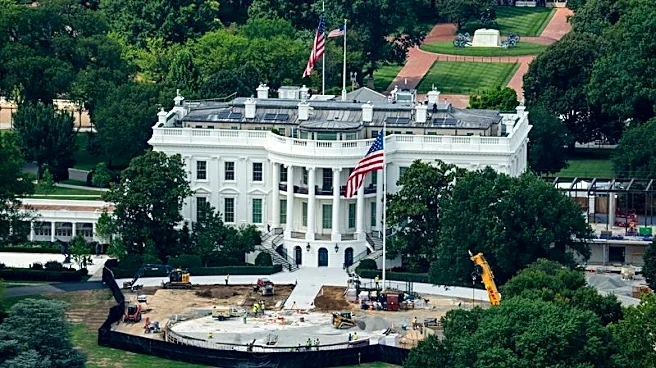
in the summer of 2025, depicts President Trump in a shadowy, almost ominous manner, surveying the site for a proposed new ballroom. The administration's use of this image on August 18, 2026, is seen as an amplification of President Trump's immigration policies, particularly his promise of mass deportations. The White House's social media strategy has also controversially incorporated popular songs from artists like Ariana Grande, Sabrina Carpenter, and Olivia Rodrigo to promote these policies, often despite the artists' explicit objections.
Why It's Important?
This development is significant as it demonstrates an unconventional and provocative approach to political communication by the White House. The use of 'analog horror' aesthetics and pop culture references, particularly without artists' consent, highlights a strategy aimed at generating viral content and engaging a younger, internet-savvy audience, albeit controversially. This tactic can normalize extreme policy stances, such as mass deportations, by presenting them through a lens that blurs political messaging with internet meme culture. It also raises concerns about the ethical implications of using artistic works for political propaganda against the creators' wishes, potentially setting a precedent for future political campaigns and impacting intellectual property rights in the digital age. The focus on mass deportations as a key policy message underscores its centrality to President Trump's agenda.
What's Next?
The continued use of such provocative imagery and unauthorized music by the White House social media team is likely to generate further debate and criticism from artists, civil society groups, and political opponents. Legal challenges regarding intellectual property rights could emerge from the artists whose music has been used without permission. This communication strategy may also influence public perception of immigration policies and the administration's approach to governance. Future political campaigns might adopt similar tactics, leading to a more fragmented and sensationalized political discourse online. The administration is expected to continue emphasizing mass deportations as a core policy, potentially escalating its social media efforts to rally support.
Beyond the Headlines
The White House's deployment of 'analog horror' aesthetics and pop music in its social media strategy points to a deeper shift in political communication, where traditional boundaries between politics, entertainment, and internet culture are increasingly blurred. This approach can be seen as an attempt to bypass traditional media filters and directly engage with the electorate, but it also risks alienating segments of the population and undermining the seriousness of policy discussions. The controversy surrounding the unauthorized use of music also highlights broader issues of digital rights and the control artists have over their creative works in an era of widespread content sharing and political appropriation. This trend could lead to a re-evaluation of how political entities engage with cultural content and the legal frameworks governing such interactions.