

What's Happening?
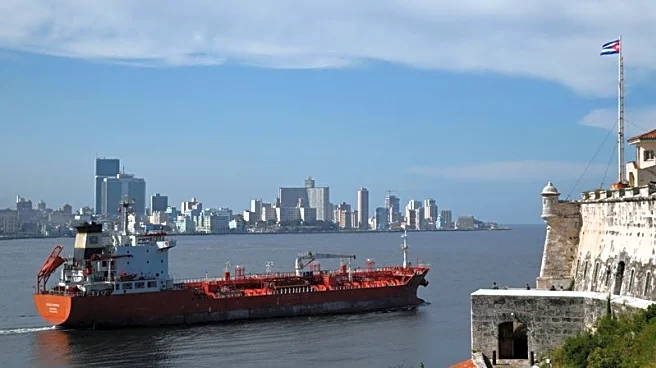
Mexico's President Claudia Sheinbaum announced plans to send humanitarian aid to Cuba, including food and other supplies, despite U.S. President Trump urging her to halt oil shipments to the island. This development follows a U.S. executive order targeting
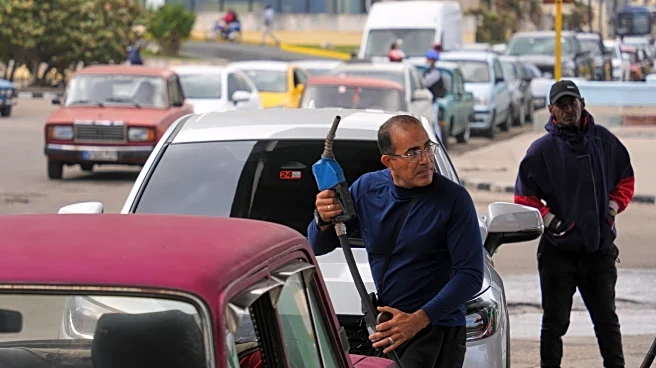
countries that sell oil to Cuba, which has put pressure on Mexico, Cuba's main oil supplier after Venezuela suspended its shipments. Pemex, Mexico's state oil company, reported shipping nearly 20,000 barrels of oil per day to Cuba from January through September 2025, but this figure has reportedly dropped to about 7,000 barrels following a visit by U.S. Secretary of State Marco Rubio to Mexico City. Sheinbaum emphasized her government's intent to diplomatically resolve the issue for humanitarian reasons.
Why It's Important?
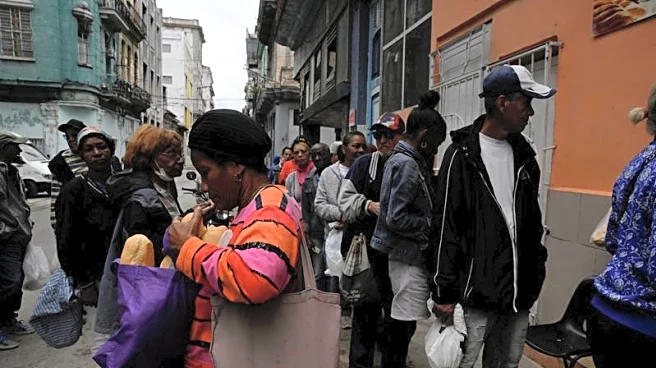
The decision by President Sheinbaum to continue aiding Cuba despite U.S. pressure highlights the complex geopolitical dynamics in the region. The U.S. aims to isolate Cuba economically, hoping to force political changes, while Mexico's stance underscores its commitment to humanitarian principles and regional solidarity. This situation could strain U.S.-Mexico relations, impacting trade and diplomatic engagements. The reduction in oil shipments to Cuba could exacerbate economic hardships on the island, potentially leading to a humanitarian crisis. Mexico's actions may also influence other Latin American countries' policies towards Cuba, affecting regional alliances and economic strategies.
What's Next?
The situation may lead to further diplomatic negotiations between the U.S. and Mexico, as both countries seek to balance their interests. Mexico might explore alternative ways to support Cuba without violating U.S. sanctions, possibly involving international organizations or other regional partners. The U.S. could respond with additional economic measures or diplomatic efforts to persuade Mexico to align with its policies. The outcome of these interactions will likely affect the broader geopolitical landscape in the Americas, influencing future trade agreements and political alliances.