







What's Happening?
The Arewa Youth Council (AYC) has lauded the Nigerian National Petroleum Company Limited (NNPC Limited) for its plan to establish between 50 and 70 Smart Self-Service fuel stations across Nigeria within the next six months. This commendation follows the commissioning
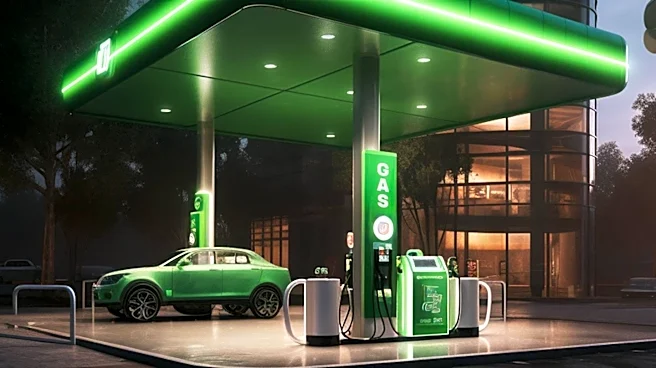
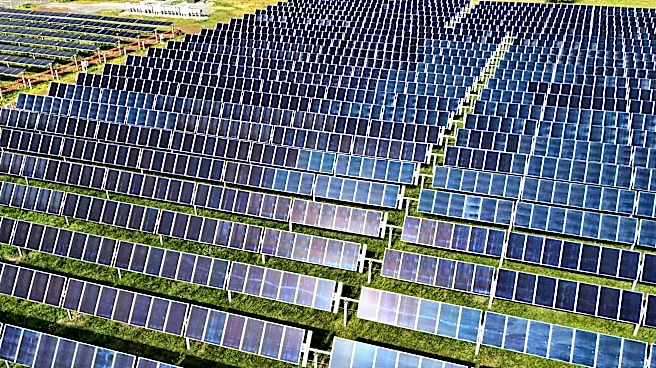
of Nigeria's first Smart Self-Service Filling Station in Abuja. The AYC, through Ambassador Sidi Sani and publicity secretary Mallam Bilal Usman, described the project as a progressive transformation of the nation's downstream petroleum retail sector. These modern energy hubs are designed to convert traditional filling stations into integrated facilities offering self-service fuel dispensing via mobile applications, digital payment systems, electric vehicle charging points, liquefied petroleum gas (LPG) facilities, and planned compressed natural gas (CNG) services. The stations will also feature solar-powered operations and complementary customer amenities, aiming to meet evolving consumer demands and prepare for a multi-energy future.
Why It's Important?
This initiative holds significant importance for Nigerian citizens and the national economy. For motorists, commercial transporters, and households, the smart stations promise reduced waiting times, greater control over transactions, and more reliable product delivery, directly improving daily convenience and efficiency. The inclusion of electric vehicle charging infrastructure and planned CNG services positions Nigeria to embrace cleaner mobility options and diversify its energy mix, aligning with global trends towards sustainable energy. At a national level, the program is strategically valuable for expanding and modernizing NNPC Limited's extensive retail network of approximately 900 outlets. This transformation is expected to deepen market presence, create new value chains, and generate opportunities in technology support, infrastructure maintenance, and customer service, contributing to sustainable employment across the sector. The AYC specifically praised Engr. Bashir Bayo Ojulari, Group Chief Executive Officer of NNPC Limited, for his leadership in driving this customer-oriented transformation.
What's Next?
The immediate next step is the accelerated and inclusive nationwide rollout of these smart self-service stations, with a particular focus on northern and underserved regions, as urged by the Arewa Youth Council. Continuous refinement of the customer experience and structured training for personnel supporting the new systems will be essential for the long-term success and widespread adoption of this model. The initiative is expected to evolve existing roles within the petroleum retail sector and introduce new skill requirements, necessitating workforce development programs. The integration of various energy sources like petrol, diesel, LPG, CNG, and electricity at these hubs suggests a future where NNPC Limited plays a central role in Nigeria's transition to a multi-energy economy. The success of this pilot phase and subsequent rollout will likely influence further technological advancements and infrastructure development in Nigeria's energy sector.
Beyond the Headlines
This initiative represents more than just an upgrade to fuel stations; it signifies Nigeria's commitment to leveraging technology for public service and economic development. The shift towards digital payments and self-service models reflects a broader trend of digitalization across various sectors, aiming to enhance transparency and efficiency while reducing opportunities for corruption. The integration of multiple energy options at a single point could fundamentally change consumer behavior and accelerate the adoption of alternative fuels, contributing to environmental sustainability. Furthermore, by creating new skill requirements and value chains, the project fosters human capital development and local innovation. This model could serve as a blueprint for other public and private sector initiatives seeking to modernize infrastructure and improve service delivery through technological integration, ultimately contributing to a more connected and efficient national infrastructure.