





What's Happening?
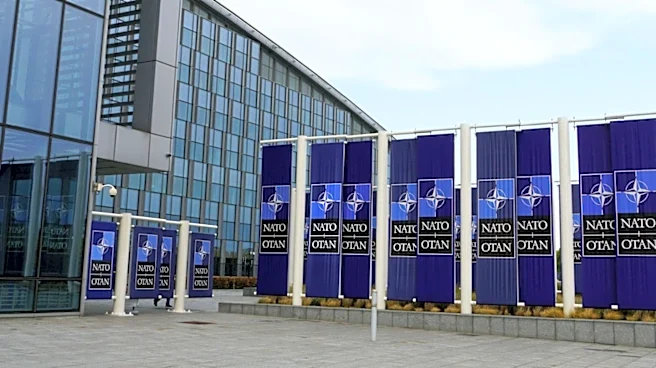
Admiral Rob Bauer, former Chair of the NATO Military Committee, has stated that the likelihood of war with Russia has increased, emphasizing that Russia could rebuild its capacity to attack NATO within approximately three years, even while its conflict
in Ukraine continues. This assessment marks a shift from earlier intelligence estimates that suggested Russia would need several years post-Ukraine war to regenerate its forces. Bauer highlighted that Russia's expanding war economy and continued force generation are creating a more dangerous environment for NATO. He stressed that NATO's industrial mobilization system is severely weakened due to decades of assuming peace in Europe, leading to a lack of readiness in terms of ammunition reserves, replacement vehicles and aircraft, industrial capacity, and the ability to generate new personnel. Bauer's warning is not a prediction of inevitable war but an argument for accelerated deterrence, asserting that insufficient readiness could encourage Russian aggression by casting doubt on NATO's ability to sustain a prolonged conflict.
Why It's Important?
This warning from a high-ranking former NATO official underscores a critical shift in the perceived threat landscape for the United States and its allies. The emphasis on a weakened industrial mobilization system highlights a significant vulnerability within NATO's defense capabilities. For the U.S., this means a potential need to re-evaluate and significantly increase its defense industrial base capacity to meet the demands of a potential large-scale conflict. The implication is that current defense budgets, while higher, may not be translating into the necessary forces, ammunition, and industrial resilience required to deter Russian aggression effectively. This situation could lead to increased pressure on the U.S. to invest more heavily in defense manufacturing, supply chain resilience, and personnel generation, potentially impacting federal budgets and economic priorities. A failure to address these industrial shortcomings could embolden adversaries and undermine the credibility of NATO's collective defense posture, directly affecting U.S. national security interests and its role as a global leader.
What's Next?
In response to these concerns, NATO is expected to intensify efforts to bolster its industrial capacity and readiness. This will likely involve increased defense spending targets among member states, with a focus on ensuring these budgets translate into tangible assets like ammunition stockpiles, new military equipment, and enhanced manufacturing capabilities. The alliance will also need to address the challenge of generating new personnel to sustain a prolonged conflict. Discussions will likely center on how to streamline defense procurement processes and foster greater collaboration among member states' defense industries. The U.S., as a leading member of NATO, will play a crucial role in driving these initiatives, potentially through increased defense aid to allies, joint industrial projects, and diplomatic efforts to ensure all members meet their commitments. The goal is to demonstrate to Russia that NATO possesses the sustained military advantage and resilience necessary to deter any potential aggression, thereby preventing a miscalculation by Moscow.
Beyond the Headlines
The deeper implications of Admiral Bauer's statements extend beyond immediate military readiness to fundamental shifts in geopolitical strategy and economic policy. The decades-long assumption of peace in Europe led to a significant decline in the defense industrial base across many NATO countries, including the U.S. Rebuilding this capacity will require not only financial investment but also a cultural shift towards prioritizing defense manufacturing and supply chain resilience. This could lead to a re-industrialization push in certain sectors, creating jobs and stimulating economic activity, but also potentially diverting resources from other areas. Furthermore, the emphasis on deterrence through sustained capacity highlights a long-term strategic competition with Russia, moving beyond immediate conflict to a sustained effort to maintain a credible defense posture. This could also influence technological innovation, with increased investment in advanced military technologies and dual-use capabilities. The ethical dimension of preparing for a potential large-scale conflict, including the societal impact of increased military service and resource allocation, will also become a more prominent consideration.